Special PCNS - UN75: Are Development challenges really intractable?

October 22, 2020

To commemorate the 75th anniversary of the United Nations, the Policy Center for the New South is pleased to organize a series of webinars to discuss key themes related to the role of the UN on the international scene. Moderator : Eduardo Amaral Haddad, Senior Fellow, Policy Center for the New South Speakers : Chidiogo Akunyili, Founder, She Roars (ADEL Alumna) Doreen Mashu, Development Consultant/Founder, The Good Heritage (ADEL Alumna) Mouhamadou Ly, Senior Economist, Policy Center for the New South

Speakers
Eduardo Amaral Haddad
Senior Fellow
Eduardo A. Haddad is Full Professor at the Department of Economics at the University of São Paulo, Brazil, where he directs the Regional and Urban Economics Lab (NEREUS). He is additionally a Affiliate Professor at the Faculty of Governance, Economic and Social Sciences of the Mohammed VI University. He also holds a position as Affiliate Research Professor at the Regional Economics Applications Laboratory – REAL – at the University of Illinois at Urbana-Champaign, USA. He is a Senior Fellow at the Policy Center for the New South, Rabat, Morocco. Prof. Haddad has published widely in professional journals on regional and interregional input-output analysis, computable general equilibrium modeling, and various aspects of regional economic development in developing countries; he ...
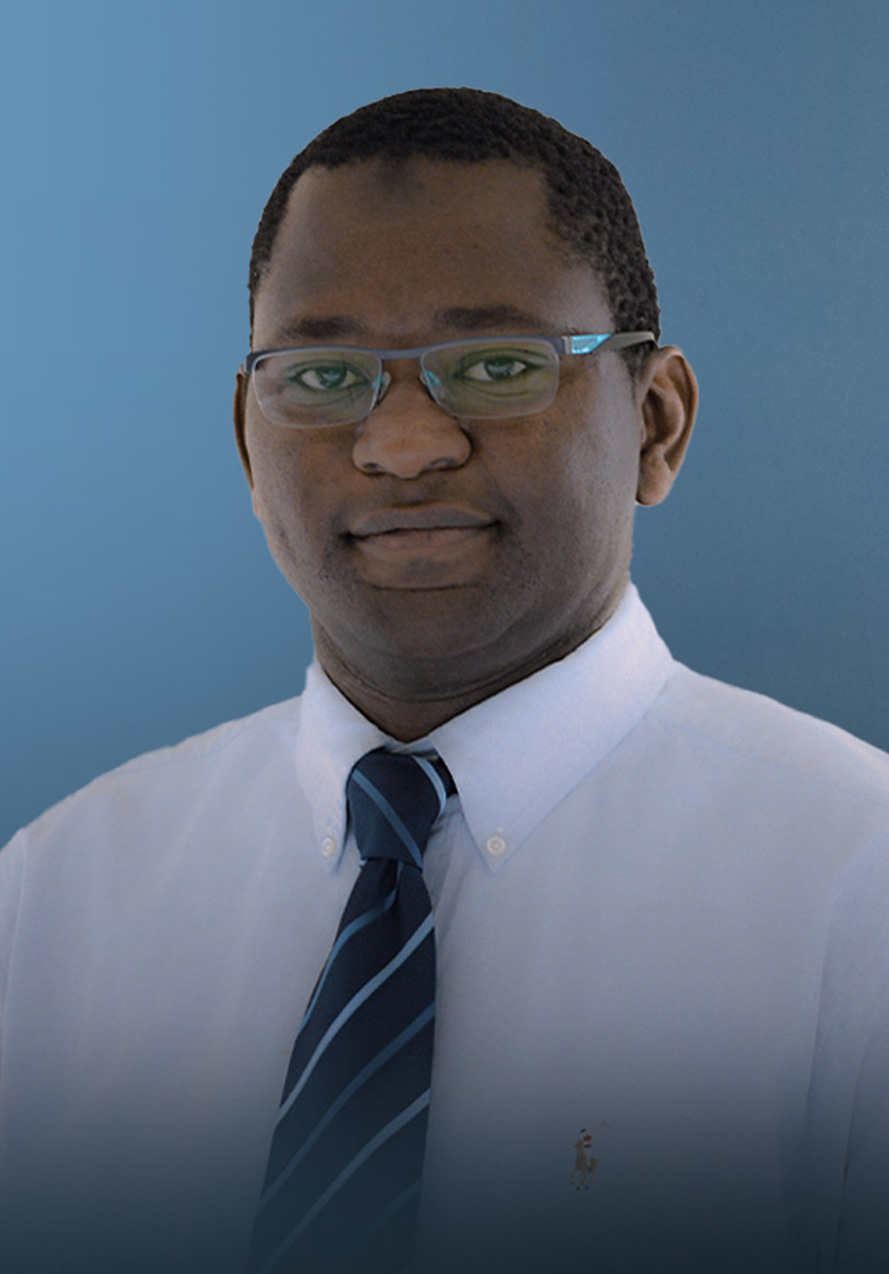
Mouhamadou Moustapha Ly
Economist, African Department of the International Monetary Fund (IMF)
Currently economist within the African Department of the International Monetary Fund in Washington DC, where he works on East African economies on various macroeconomic policy subjects and surveillance, he is also an affiliate professor of economics at Mohamed-6 Polytechnic university in Rabat (Morocco). Prior to that, Mouhamadou was senior economist at the Policy Center for the New South in Rabat (Morocco) working on development related issues and regional integration in the African continent. Mouhamadou also spent several years as assistant professor at Gaston Berger university in Saint-Louis (Senegal) and a lecturer at Auvergne university (France) and City university (London). He also worked as research fellow at the African Center for Statistics in the United Nations Econo ...


RELATED CONTENT

  • July 3, 2026
    Este Policy Paper también ha sido publicado en inglés y francés por Le Grand Continent La economía marroquí constituye un caso ilustrativo entre las economías de renta media, en un contexto marcado por una creciente fragmentación del entorno internacional, un crecimiento mundial anémico y una desaceleración de la convergencia. Desde 2022, su trayectoria se caracteriza por una relativa solidez, con un crecimiento superior a la media de las economías de la misma categoría. Superi ...
  • July 3, 2026
    This Policy Paper has also been published in French and Spanish by Le Grand Continent Morocco offers a compelling example of how a middle-income economy can navigate a more fragmented global environment, characterized by weak growth and slower convergence. Since 2022, economic activity has remained relatively strong, with growth exceeding that of many comparable economies. Non-agricultural growth has averaged 4.4% since 2022, around 1.3 percentage points above its historical av ...
  • July 3, 2026
    Ce Policy Paper a également été publiée en anglais et en espagnol par Le Grand Continent Le Maroc offre un exemple éclairant parmi les pays à revenu intermédiaire, dans un contexte marqué par une fragmentation croissante de l’environnement international, une croissance mondiale atone et un ralentissement de la convergence. Depuis 2022, sa trajectoire se distingue par une certaine robustesse, avec un rythme d’expansion supérieur à celui des autres économies de même catégorie. Dé ...
  • Authors
    June 30, 2026
    The inventory is worrisomely low The US military has fired off more than 1000 Tomahawk cruise missiles, roughly ten times the number it currently buys each year. The Pentagon used more than 1200 Patriot interceptor missiles, "more than three million dollars a pop", and more than 1000 precision strike, ground based missiles, "leaving the inventories worrisomely low." US commanders were forced to ration interceptors by letting unguided or less destructive missiles hit empty or no ...
  • June 24, 2026
    Africa, Latin America, and the Caribbean have both the potential and the desire to transform their people's lives through Green Industrial Policy. Yet they have long been constrained by structural obstacles embedded in the international system. The current rupture in that system, which ...
  • June 22, 2026
    History devotes considerable attention to the rise and fall of great powers. Scholars have spent centuries analyzing why empires collapse, why nations decline, and why dominant states eventually lose their position. By comparison, relatively little attention has been devoted to a different question: what happens when a country succeeds beyond its own expectations? ...
  • Authors
    June 19, 2026
    The early March 2026 Pentagon briefings were tuned towards triumph and surrender - unconditional. The white flag of defeat was visible on the Iran horizon, and America's commander in chief needed only a few more weeks to declare "their military is gone. Wiped out". His secretary of war, Pete Hegseth, added to Trump's assessment his own, the Iranian navy was "decimated, destroyed and defeated", the naval fleet of the enemy rested on the bottom of the Persian Gulf. Iran's defense indu ...
  • June 15, 2026
    As part of the OECD Multilateral Development Finance Week 2026 (MDF Week), the Policy Center for the New South (PCNS) is organizing a webinar entitled “Rethinking Development Finance: African Agency and the Future of Multilateral Development Co-operation after ODA Retrenchment.” The dis...
  • Authors
    Mehran Haghirian
    June 15, 2026
    This article draws in part on perspectives shared by members of the Rihla Initiative for Green Economic Growth, whose regional insights helped inform the sections on how the costs of the war are being felt across the Global South. The war on Iran and in the Gulf has made it impossible to treat the Strait of Hormuz as a regional issue. The disruption around the Strait has moved through the world economy in concrete ways, from higher fuel bills and pressure on food and fertilizer ...
  • Authors
    June 12, 2026
    This essay argues that the current debate about the future of the international monetary system is not really about Gulf currencies, oil pricing, or de-dollarization in the narrow technical sense. It is about something deeper and more important: whether institutional trust can survive when geopolitical certainty is eroding.The Gulf monarchies—Saudi Arabia, the United Arab Emirates, Qatar, Kuwait, Bahrain, and Oman—increasingly exist in a world where the United States no longer looks ...