
Gouvernance et biens communs : repenser la coopération dans un monde fragmenté

January 16, 2025

Alors que les défis globaux – changement climatique, transition énergétique, montée des conflits – s'accumulent, les outils multilatéraux peinent à offrir des solutions efficaces. La montée du protectionnisme et des intérêts nationaux exacerbe ces tensions, tandis que l'Afrique, riche en ressources stratégiques, s'impose comme un acteur incontournable. La souveraineté économique, la transformation locale des ressources et l'équité dans les échanges deviennent des impératifs pour une gouvernance mondiale qui réponde véritablement aux besoins des populations et des générations futures.

Speakers
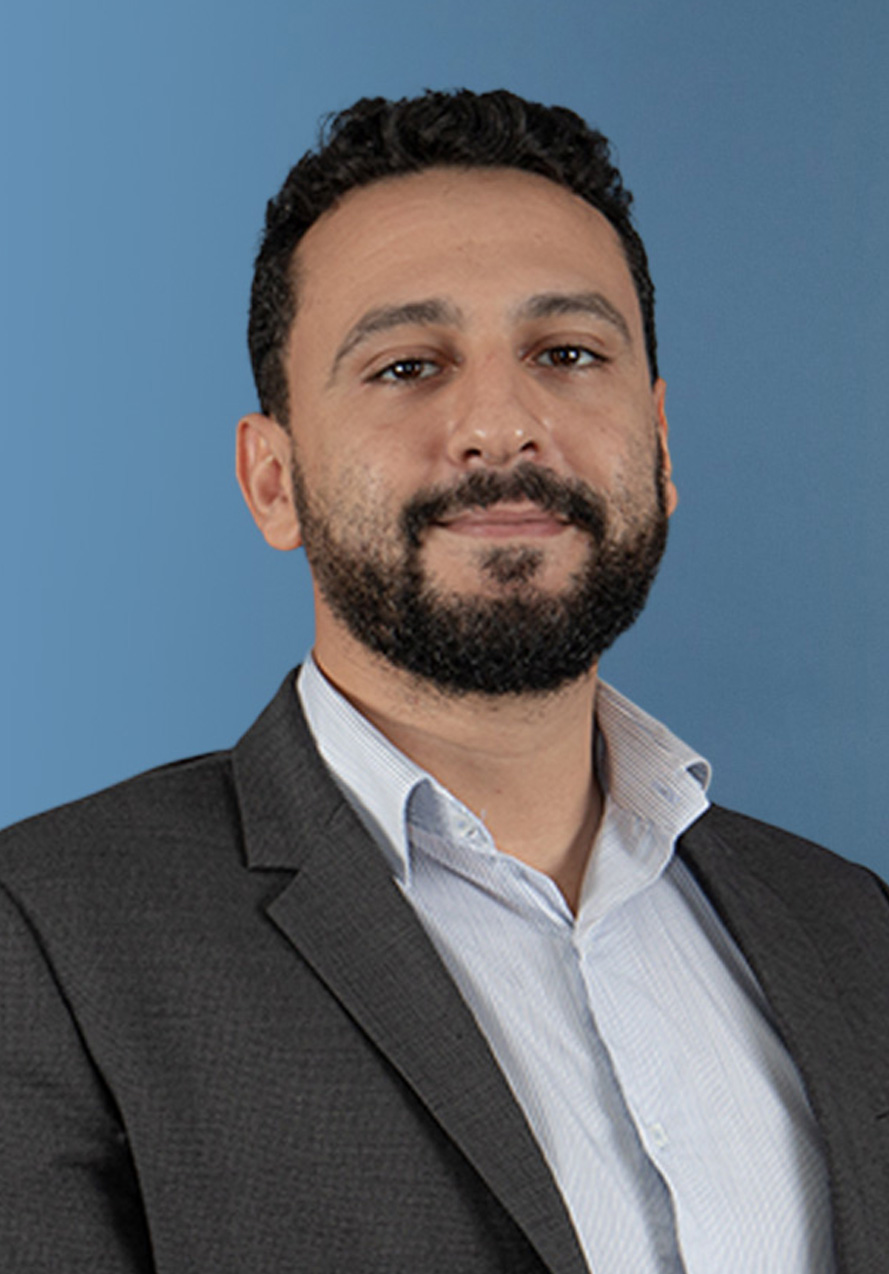
Akram Zaoui
Chargé de Mission to the Executive President
Akram Zaoui is a Senior International Relations Specialist and Chargé de Mission to the Executive President at the Policy Center for the New South (PCNS). Prior to this, he was Manager of Research Support and the Public Policy Lab at the PCNS. His main area of interest is the geopolitical economy of the Extended Middle East and North Africa (MENA) region. From 2018 to 2020, Zaoui was the coordinator of a network of 70+ civil society organizations (CSOs) across France, working with foundations, government, local communities, and the private sector. Zaoui holds a dual degree in corporate and public management from HEC Paris and Sciences Po, as well as a bachelor's degree (licence) in history from Université Paris 1 Panthéon-Sorbonne. He audited courses in Iranian and Shia Stud ...

  • Authors
    April 17, 2026
    The International Court of Justice’s (ICJ) 2025 advisory opinion on climate change marks a significant expansion of international law into the governance of global public goods. By framing climate inaction as a potential violation of international law and human rights, the Court advances a progressive legal agenda that extends beyond existing political consensus and enforcement capacity. This article develops a realist critique of the ruling that avoids both legal romanticism and ni ...
  • April 16, 2026
    Gulf countries are increasingly shaping Africa’s political and economic landscape through investments in infrastructure, energy, and strategic sectors. Their flexible, capital-driven approach and strong political ties distinguish them from traditional partners. While creating opportunit...
  • April 14, 2026
    في هذه الحلقة يتم تناول دور الجامعات المغربية في تعزيز الدبلوماسية العلمية للمغرب على المستويين الإقليمي والدولي، وإمكانية تحولها إلى فاعل أساسي في القوة الناعمة الوطنية، كما يناقش أهمية الشراكات الأكاديمية والبحثية الدولية في تعزيز الإشعاع العلمي ونقل المعرفة، ويتطرق كذلك إلى أبرز التح...
  • Authors
    April 10, 2026
    On February 10, 2026, the European Parliament endorsed an asylum reform that expands the use of the ‘safe third country’ concept and introduces a common European Union list of ‘safe countries of origin’. This reform represents more than a technical adjustment of asylum procedures, as it signals a structural reorientation of EU asylum governance toward faster filtering of claims and greater reliance on external actors.The concept of a safe third country already exists in European asy ...
  • April 9, 2026
    Trois ans après l'adoption du premier Plan d'Action National (PAN) sur l'Agenda Femmes, Paix et Sécurité (FPS), le Maroc affiche des avancées institutionnelles réelles mais une mise en œuvre encore insuffisante. L'extension du PAN ouvre une fenêtre d'opportunité pour préparer un second cycle plus ambitieux et opérationnel.Ce Policy Brief identifie quatre obstacles persistants : un taux d'activité féminine de 19,1% en quasi-stagnation, une représentation des femmes inférieure à 3% da ...
  • Authors
    Paul Isbell
    April 2, 2026
    PrefaceThis series of policy briefs, Pan-Atlanticism: The Atlantic Basin in a Multipolar-Transnational World, assesses the strategic significance—and potential—of the Atlantic Basin, when viewed and engaged with as a distinct and coherent region for international cooperation or governance, and as a potential arena of strategic competition, within a shifting structure of international power that is now moving from unipolarity to a new multipolar reality.The series began by tracing th ...
  • April 2, 2026
    In this episode of Africafé, the discussion explores the evolving dynamics of China–Africa relations, highlighting their strategic, economic, and political dimensions. Featuring Dr. Ana Cristina Alves, the conversation unpacks how this partnership has shifted over time—from resource-dri...
  • Authors
    April 1, 2026
    We are now in the fifth week since the U.S. airstrike that killed top leaders of the Iranian regime, initiating a war involving the United States and Israel against the country. More than a month of mutual bombardments between Iran and Israel has ensued, extending to other Persian Gulf nations, U.S. military installations—and even Cyprus. From a global perspective, the impact has stemmed primarily from disruptions to regional production of goods and the blockade of the Strait of Hor ...
  • Authors
    March 30, 2026
    This essay examines the establishment of the Board of Peace as a test case in contemporary peace governance and hegemonic experimentation. While the Board, politically activated in early 2026 and formally anchored in a resolution of the United Nations Security Council, benefits from derivative legality under the UN Charter, its legal foundation remains constitutionally fragile, its mandate ambiguously constrained, and its accountability architecture underdeveloped, notwithstand ...