Présentation du Rapport Annuel sur l’Economie de l’Afrique 2020

February 3, 2021

Le Policy Center for the New South organise un webinaire mercredi 3 février 2021 à 15h (GMT+1) consacré à la présentation de son Rapport Annuel sur l’Economie de l’Afrique 2020. A cette occasion, plusieurs auteurs du rapport présenteront le fruit de leurs recherches et analyses. L’Economie de l’Afrique 2020 est la deuxième édition du Rapport économique que le Policy Center for the New South consacre chaque année à notre continent. Dans cette nouvelle livraison, nous restons fidèles à la démarche suivie lors du lancement de cette initiative : contextualiser rigoureusement les performances économiques de l’Afrique ; appréhender les changements qui traversent les Communautés économiques régionales (CER) dans la voie de l’intégration africaine ; analyser les décisions prises par l’Organisation continentale dans la mise en œuvre de l’ambitieux projet de zone de Libre-Echange. Une démarche qui nous met au cœur des grandes questions de développement de l’Afrique, leur permanence, leur récurrence et leur nouveauté.
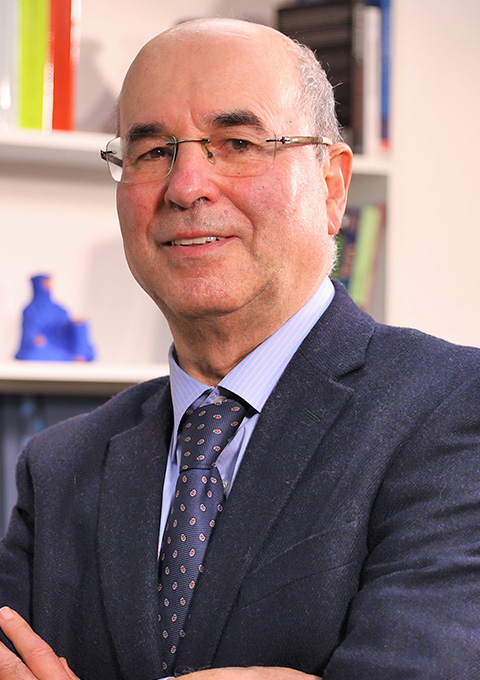

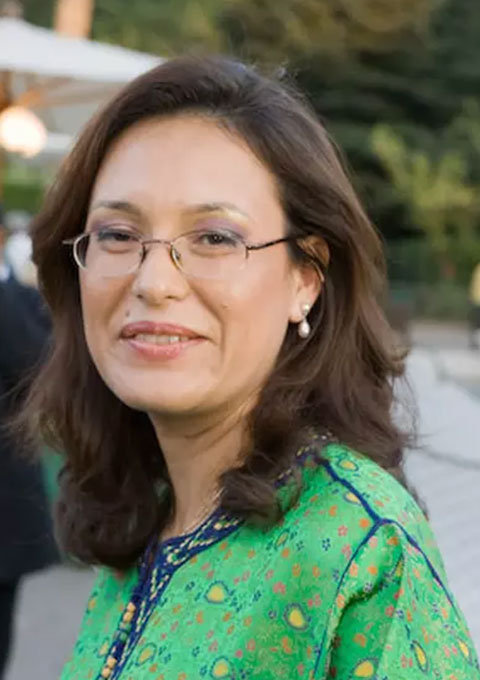
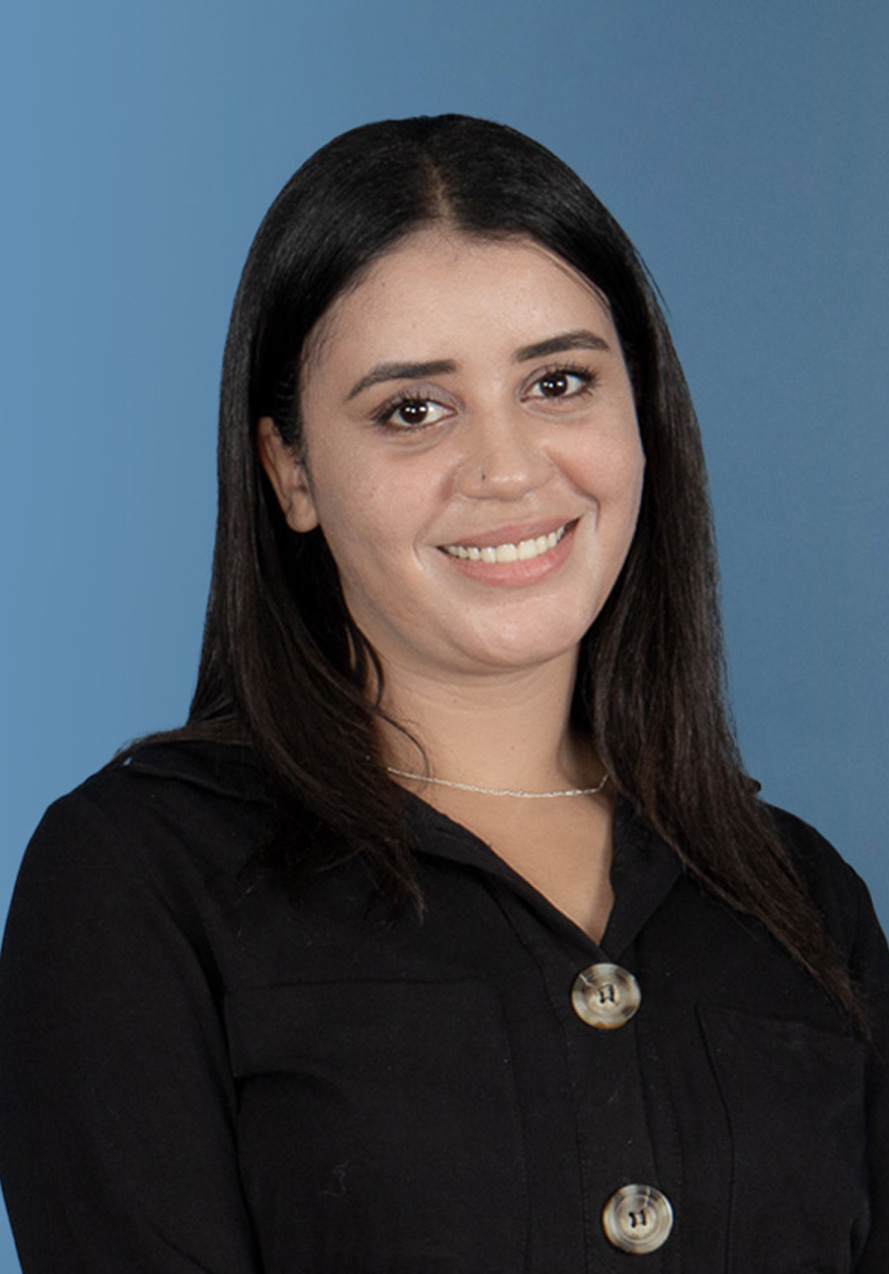
Speakers
Larabi Jaïdi
Senior Fellow
Larabi Jaïdi is a Senior Fellow at the Policy Center for the New South and an Affiliate Professor at Mohammed VI Polytechnic University. His areas of expertise include international economy, economic policies, international economic relations, regional economies, social development, international relations, and Mediterranean studies. He also served on the Special Commission on the New Development Model of Morocco, a consultative body created in November 2019 to formulate the country's new developmental guidelines. Jaïdi is a former Professor at Mohamed V University in Rabat-Agdal and a founding member of both the Centre Marocain de Conjoncture and the Groupement d’Etudes et de Recherches sur la Méditerranée.   Prof. Jaïdi previously served as Advisor to the Prime Minist ...
Mouhamadou Moustapha Ly
Economist, African Department of the International Monetary Fund (IMF)
Currently economist within the African Department of the International Monetary Fund in Washington DC, where he works on East African economies on various macroeconomic policy subjects and surveillance, he is also an affiliate professor of economics at Mohamed-6 Polytechnic university in Rabat (Morocco). Prior to that, Mouhamadou was senior economist at the Policy Center for the New South in Rabat (Morocco) working on development related issues and regional integration in the African continent. Mouhamadou also spent several years as assistant professor at Gaston Berger university in Saint-Louis (Senegal) and a lecturer at Auvergne university (France) and City university (London). He also worked as research fellow at the African Center for Statistics in the United Nations Econo ...
Nezha Alaoui M’hammdi
Senior Fellow
Mrs. Nezha Alaoui M’Hammdi is Senior Fellow at Policy Center for the New South (since 2020) and the current Ambassador of His Majesty the King of Morocco to Ethiopia and Djibouti since 2016. She has served as first Permanent Representative of the Kingdom of Morocco after its return to the African Union by 2017, and to the Peace and Security Council of the AU (April 2018). She is currently Dean of the Council of Arab League Ambassadors to Ethiopia She also served from 2013 to 2016 as an Ambassador of Morocco to Ghana, Togo and Benin, being the first Moroccan female Ambassador of the Kingdom of Morocco in Africa. After joining the Moroccan Ministry of Foreign Affairs of Morocco in 1989, Mrs. Nezha Alaoui M’Hammdi served mainly in Italy and Ghana. During her assignment, from 2 ...
Amal El Ouassif
Senior International Relations Specialist
Amal El Ouassif is a Senior International Relations Specialist at the Policy Center for the New South (PCNS).She is also a PhD candidate in Forced Displacement Induced by Climate Change at University Mohammed VI Polytechnic (UM6P) and CNAM-Paris and a member of the IDRC-FGSES Chair of UM6P on Forced Displacement Studies.At the PCNS, Amal El Ouassif conducts research on topics including migration, forced displacement, and Euro-Mediterranean cooperation.Before joining PCNS in 2018, she worked as a program coordinator at the Westminster Foundation for Democracy and served as a consultant in development policies with the office of the Deutsche Gesellschaft für Internationale Zusammenarbeit (GIZ) in Morocco.She is also a former bluebook trainee in the Directorate General ...
Muhammad ba
Enseignant Chercheur, Université Gaston Berger
Docteur en sciences économiques, Muhammad BA est spécialiste de l’économie du développement. Ses domaines de recherche en économie portent sur l’évaluation de la pauvreté multidimensionnelle, des inégalités et du bien-être notamment dans le cadre de l'approche par les capabilités d'Amartya Sen. Dans ses domaines, il est auteurs de plusieurs publications dans des revues avec comité de lecture. Il est actuellement enseignant-chercheur à l’Université Gaston Berger à la section d’Economie où il dispense entre autres les cours d'économie du développement, de comptabilité nationale et de macroéconomie. A côté de ses activités de recherche, Dr. Muhammad BA s’intéresse également à la transformation structurelle des pays africains. C’est en ce sens qu’il a travaillé pendant plus d’un ...

RELATED CONTENT

  • Authors
    Edited by Karim El Aynaoui
    Arkebe Oqubay
    April 1, 2026
    window.location="https://www.policycenter.ma/oxford-handbook-economy-morocco";The Oxford Handbook of the Moroccan Economy provides a comprehensive and analytically grounded assessment of Morocco’s economic trajectory from 1960 to 2025. Bringing together 53 contributors across 34 chapters, the volume is conceived as a reference work, offering a structured analytical approach grounded in stylized facts, long-term trends, sectoral transformations, and the key public policy challenges s ...
  • March 13, 2026
    Dans cet épisode, nous examinons comment la finance climat peut catalyser la transition énergétique en Afrique, en mobilisant des instruments innovants et des partenariats public-privé pour soutenir des projets durables, tout en surmontant les défis d’accès au capital et d’infrastructur...
  • March 10, 2026
    بمناسبة اليوم العالمي لحقوق المرأة في 8 مارس، يتناول هذا اللقاء وضعية المرأة القروية في المغرب والتحولات التي عرفها دورها في التنمية الاقتصادية والاجتماعية خلال السنوات الأخيرة. كما يسلط الضوء على مساهمتها الكبيرة في الأنشطة الفلاحية والأسرية، رغم أن جزءاً مهماً من عملها يظل غير مرئي أو...
  • Authors
    February 24, 2026
    This Paper was originally published on sciencedirect.com This paper assesses the national and regional impacts of the Marrakech–Fès highway project in Morocco using a Spatial Computable General Equilibrium (SCGE) model combined with GIS-based road network data. The analysis captures how improved connectivity alters economic performance and emissions patterns across space and time. Results show that while overall economic gains are modest, the benefits are unevenly distributed—f ...
  • January 29, 2026
    Le Mali, le Burkina Faso et le Niger, réunis au sein de l’Alliance des États du Sahel (AES), affirment l’ambition de bâtir une souveraineté nationale qui leur permettrait de s’émanciper de la domination et des influences extérieures et de se doter d’une liberté d’action dans les choix de développement politique et économique. Cependant, cette ambition se heurte à de nombreuses contraintes économiques et sécuritaires.La souveraineté ne peut se construire sans une base économique soli ...
  • Authors
    January 27, 2026
    This paper revisits Big Push industrialization theory in the context of open economies deeply integrated into global value chains (GVCs). While classical Big Push models emphasize demand complementarities and coordination failures in largely closed economies, many middle-income countries now industrialize through foreign-owned, import-intensive production networks. We develop an extended Big Push framework that incorporates GVC integration and import leakage, and show how these feat ...
  • Authors
    January 23, 2026
    Introduction: COP30 as a Test of Reality, Not AmbitionCOP30 in Belém was never going to be a breakthrough. In a world marked by fiscal exhaustion, geopolitical rivalry, and eroding trust in multilateralism, expecting transformational climate cooperation bordered on denial. The choice of the Amazon as host carried symbolic weight, but symbolism does not override power, interests, or institutional capacity.The outcome of COP30 confirms a deeper truth: the global climate regime has ent ...