
Les Mardis du PCNS 6/7/2021: حلقة خاصة: تقديم التقرير السنوي للجيوسياسة الإفريقية

June 6, 2021

التقرير السنوي للجيوسياسة الإفريقية مشبع بروح وفلسفة مركز السياسات من أجل الجنوب الجديد. جنوب منفتح على العالم وغير مقيد في علاقته بالآخرين وفي رؤيته للذات. هذا والتقرير يدرس إفريقيا بنقاط قوتها ومعيقاتها، بمميزاتها وعيوبها، ما يجب تصحيحه وإعادة تنظيمه، وما يجب صيانته وتقويته وتوطيده تدور الأسئلة التي تم تناولها حول القضايا الاجتماعية، والموضوعات المتعلقة بالسياسة والحكامة، وكذلك أسئلة حول قضايا السلام والأمن إضافة إلى تداعيات الازمة الصحية على المستوى القاري. يتطرق التقرير بين طياته إلى مجموعة من التحديات والمقاربات التي تنبني على أساسها الديناميكيات المتغيرة للقارة إن على التحديات الأمنية في منطقة الساحل وتحدي التنسيق بين الاستجابات الدولية والوطنية في سياق الازمة الصحية، أو ما وراء المؤسسات من ضرورة وجود نموذج جديد يتسم بمقاربات تنبثق من أسس الحكامة وآلياتها بشكل يتماشى مع خصوصيات القارة الإفريقية.
Speakers
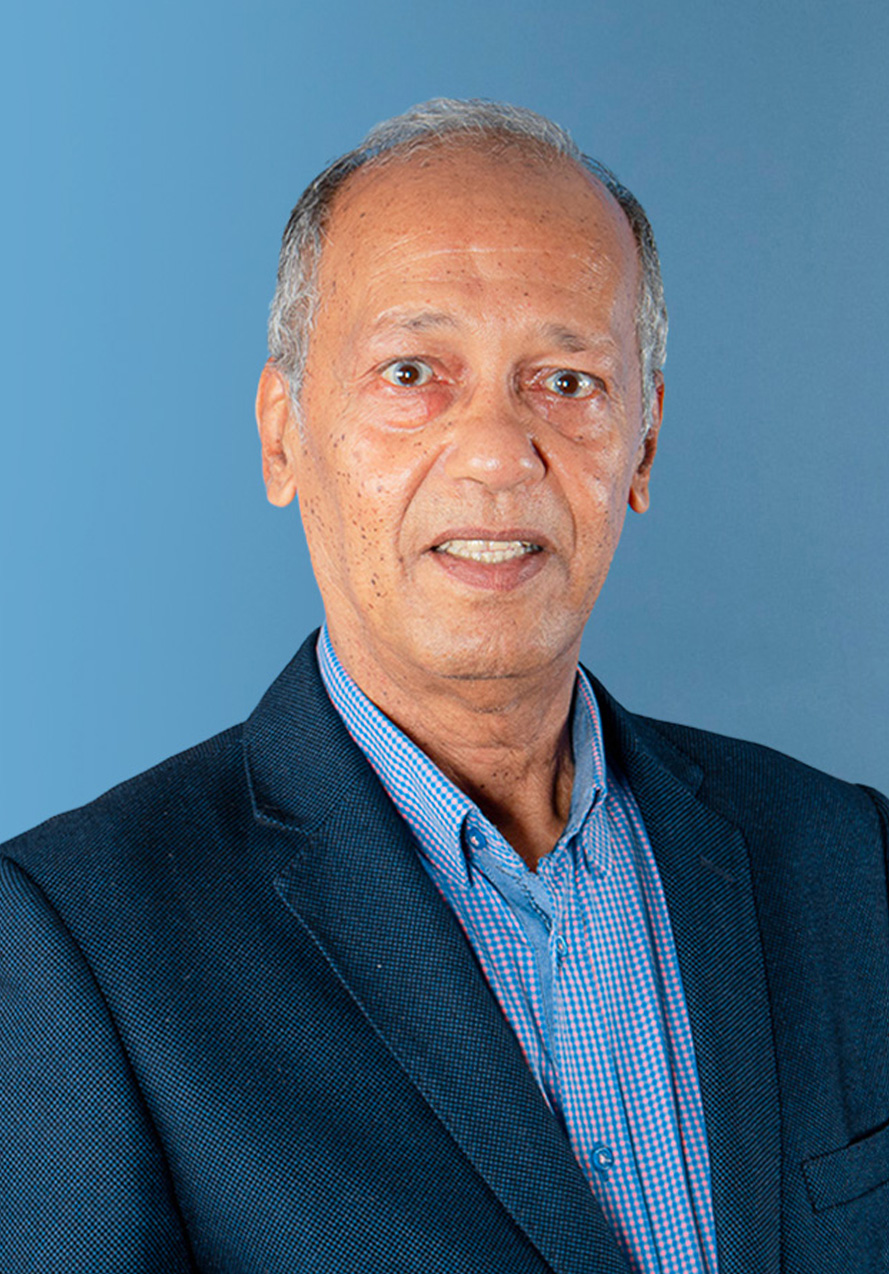
Abdelhak Bassou
Senior Fellow
Abdelhak Bassou is a Senior Fellow at the Policy Center for the New South and a non-resident senior fellow at the Atlantic Council’s Africa Center. He is also an Affiliate Professor at Mohammed VI Polytechnic University. Bassou has had an extensive career in Moroccan National Security, where he served in various capacities including as head of the border division from 1978 to 1993. He was the former director of the Royal Institute of Police in 1998 and served as Head of Regional Security (Errachidia 1999-2003, Sidi Kacem 2003-2005) and as Central Director of General Intelligence from 2006 to 2009.   He holds a master's degree in political science and international studies from the Faculty of Law, Economics, and Social Sciences in Rabat. His academic research delves into ...

RELATED CONTENT

  • Authors
    Paul Isbell
    October 9, 2026
    In the first seven Policy Briefs of this ongoing series of analysis on Pan-Atlanticism: The Atlantic Basin in a Multipolar-Transnational World, we developed the argument that the strategic significance of the Atlantic Basin is on the rise for a range of international actors (states, regions and non-state agents) and from distinct political or ideological perspectives. In addition, in the most recently published Policy Brief -- “The U.S. and the Current International Reconfiguration: ...
  • Authors
    Lina Jaoid
    October 8, 2026
    In the two years since the fall of Bashar al-Assad in Syria, Russia has restructured its Mediterranean presence. Although Russia’s limited and increasingly conditional access to the Khmeimim and Tartus facilities in Syria has been preserved, its presence in the country has morphed from Assad’s ‘patron-client’ configuration to a more negotiated engagement. Simultaneously, Russia has upgraded its force-projection and logistical infrastructure in eastern Libya, giving it an access path ...
  • October 7, 2026
    Brazil's election poses a question that extends well beyond Latin America: how much freedom does a country retain to define its international role when external pressure collides with domestic political exhaustion? For the Global South, the answer matters more than any foreign government's preference regarding the next occupant of the presidential palace. Strategic autonomy remains fragile if every change of government puts a country's freedom of action back up for negotiation. ...
  • Authors
    Marie-Noelle Nwokolo
    October 6, 2026
    The author of this opinion, Marie-Noelle Nwokolo, is a 2024 alumna of the Atlantic Dialogues Emerging Leaders Program.In September 1978, delegations from 138 countries gathered in Buenos Aires, Argentina, around a powerful idea: developing countries had knowledge, experience and capabilities worth sharing with one another. The Buenos Aires Plan of Action gave institutional form to what we now call South-South Cooperation, part of a wider post-colonial effort by developing ...
  • October 02, 2026
    Building on his Policy Brief "Latin America, World Politics and the Great Powers", Nizar Messari examines how recent developments are reshaping U.S. influence in the region and affecting ...
  • Authors
    October 2, 2026
    The incident involving Flydubai Flight FZ1073 between Dubai and Tel Aviv does not yet support any definitive attribution. It does, however, provide a useful warning sign: as aviation security closes off traditional avenues of intrusion, threats may shift towards alternative pathways by exploiting the people, service providers, and systems that the aviation ecosystem must necessarily trust.  ...
  • Authors
    October 2, 2026
    L’incident du vol FZ1073 entre Dubaï et Tel-Aviv ne permet encore aucune attribution définitive. Il constitue en revanche un révélateur utile : à mesure que la sûreté aérienne ferme les voies classiques d’intrusion, la menace cherche à emprunter des voies alternatives en exploitant les personnes, les prestataires et les systèmes auxquels l’écosystème aéronautique doit nécessairement accorder sa confiance. ...
  • Authors
    September 30, 2026
    On August 7, 2026, Saudi Arabia, Turkey, and Pakistan signed the Mecca Joint Défense Agreement, a collective-defense pact widely compared to NATO’s Article 5. This essay argues that the comparison is misleading. Mecca borrows NATO’s language of solidarity without yet possessing NATO’s institutional machinery, and the Houthi offensive against Saudi Arabia in September 2026 provided an early and revealing test of what the agreement actually means in practice. Neither Pakistan nor Turk ...
  • Authors
    September 30, 2026
    You can imagine how often I've been asked to comment on where the Brazilian economy is headed after the election. With polls pointing to a runoff on October 25 and currently showing a statistical tie between Luiz Inácio Lula da Silva and Flávio Bolsonaro in vote simulations, I'm naturally asked about their economic programs and about the country's relations with the United States. ...
  • September 28, 2026
    This paper was initially published in French on the website of the Fondation Jean-Jaurès. There was a historic decline in Official Development Assistance (ODA) in 2025. Foreign aid to developing countries from members of the OECD-DAC fell by some 23%, the largest decline on record and the second consecutive annual decline. Aid to Africa fell by more than 25%. The International Monetary Fund (IMF) described this decline in ODA to Africa as “a shock like no other.” It differ ...