
Global Impact of Migration: Celebrating International Migrants Day and Addressing Challenges

December 19, 2023

Each year on December 18th, the World is celebrating the International Migrants Day. Let us all, by this occasion seize the opportunity to recall all the opportunities brought by those migrants, estimated at more than 281 million international migrants in last years’ IOM report, those hard-working individuals contributed to an amount of 702 billion USD globally in 2020. But the same year also witnessed 89.4 million displaced population at the international level including refugees, asylum seekers and internally displaced persons. Economic reasons and the search for better living conditions continue to be the main driver of this international migration. However, year after year, mixed migration that is the result of compounded crisis such us the effects of climate change, food insecurity, conflicts and political instability are increasingly gaining ground in driving people to quit their countries of origin, in the search for better horizon. It is hence important to remind ourselves of the key role played by international migrants in driving both the economies of the host and origin countries, and hence recognize that the key to combatting irregular migration is through improving mobility schemes such as circular migration programs, instead of spreading hate narratives on migrants and their role at the international level.
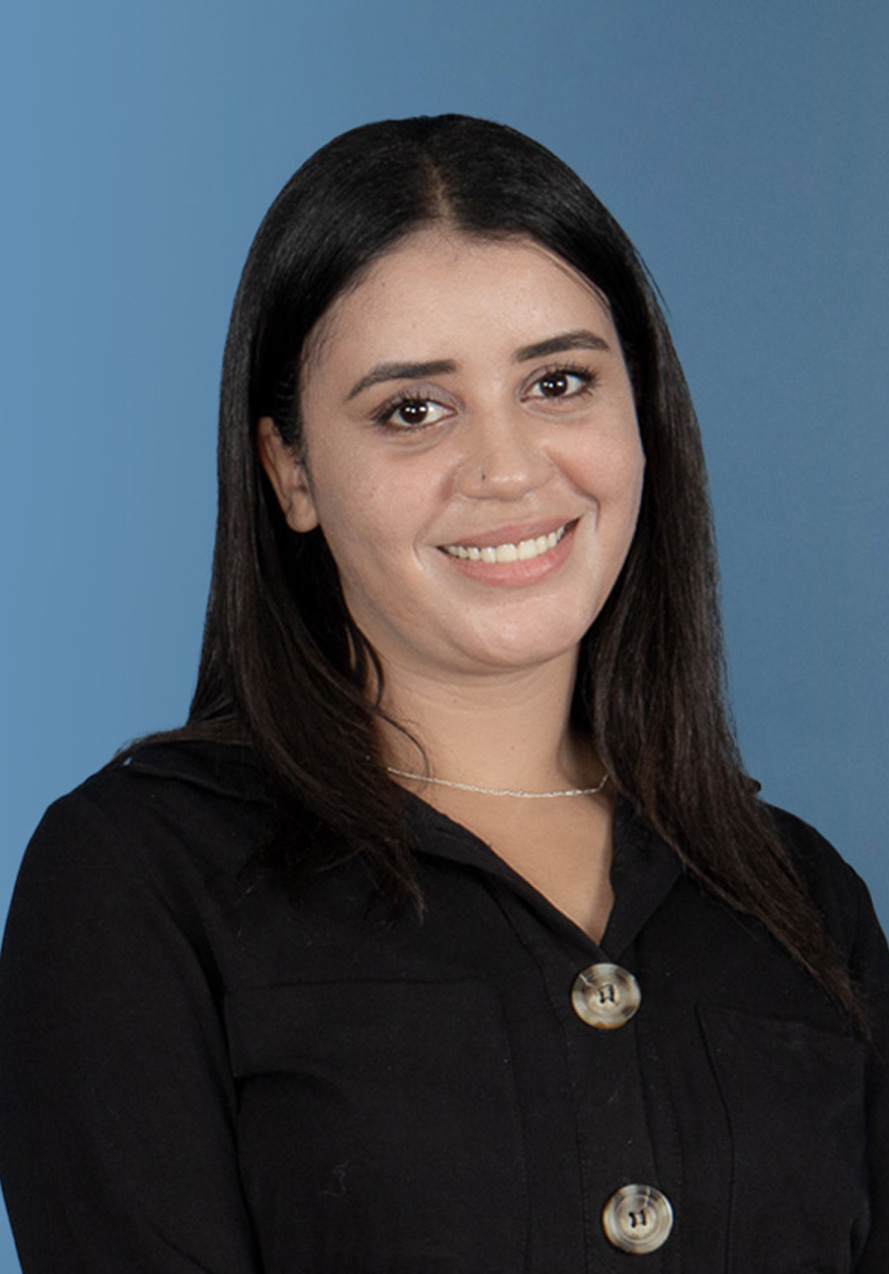
 

Speakers
Amal El Ouassif
Senior International Relations Specialist
Amal El Ouassif is a Senior International Relations Specialist at the Policy Center for the New South (PCNS).She is also a PhD candidate in Forced Displacement Induced by Climate Change at University Mohammed VI Polytechnic (UM6P) and CNAM-Paris and a member of the IDRC-FGSES Chair of UM6P on Forced Displacement Studies.At the PCNS, Amal El Ouassif conducts research on topics including migration, forced displacement, and Euro-Mediterranean cooperation.Before joining PCNS in 2018, she worked as a program coordinator at the Westminster Foundation for Democracy and served as a consultant in development policies with the office of the Deutsche Gesellschaft für Internationale Zusammenarbeit (GIZ) in Morocco.She is also a former bluebook trainee in the Directorate General ...

RELATED CONTENT

  • July 10, 2026
    For much of the post-war period, the Global South was framed as an object of history, defined by dependency, constrained by structural asymmetries, and confined to the margins of global decision-making. That narrative, once empirically grounded, is now no longer adequate. A profound yet uneven transformation is underway. The Global South is no longer only reacting; it is increasingly shaping rules, institutions, and narratives.This Policy Brief argues that the Global South is thus t ...
  • Authors
    July 9, 2026
    Cet essai analyse la guerre Iran–États-Unis–Israël de 2026 comme un révélateur de la transformation profonde de l’ordre international. À travers le prisme du droit de la mer, du détroit d’Ormuz, des alliances fragmentées, des câbles sous-marins et des flux énergétiques, il montre que le pouvoir mondial se déplace progressivement du contrôle des territoires vers la maîtrise des infrastructures de circulation. Loin de disparaître, la mondialisation entre dans une phase de connectivité ...
  • July 7, 2026
    For a long time, security in the Sahel relied on Western military deployments, which failed to curb the jihadist threat, thereby demonstrating the limitations of a cooperation model based on logistical and doctrinal dependence on foreign partners. The three Sahelian states have decided to break away from this system and build“integrated security sovereignty.” This approach has taken hold against a backdrop of openness to new partners. Russia has thus established itself as the main m ...
  • Authors
    July 6, 2026
    We take the 2026 G7 Summit in Évian-les-Bains as a case study for understanding how a leading existing multilateral organisation adapts to a more fragmented, technologically inflected, and multipolar world. We argue that the significance of Évian lies less in the summit agreements themselves than in what the summit reveals: a qualitative shift in governance away from exclusive summit diplomacy and towards more selective coalition-building, broader engagement with non-state actors, a ...
  • July 3, 2026
    This Policy Paper has also been published in French and Spanish by Le Grand Continent Morocco offers a compelling example of how a middle-income economy can navigate a more fragmented global environment, characterized by weak growth and slower convergence. Since 2022, economic activity has remained relatively strong, with growth exceeding that of many comparable economies. Non-agricultural growth has averaged 4.4% since 2022, around 1.3 percentage points above its historical av ...
  • Authors
    Sous la direction de
    June 23, 2026
    L’Afrique atlantique émerge aujourd’hui comme un espace de réflexion stratégique majeur. Longtemps envisagée sous l’angle de sa fragmentation ou de sa marginalité relative dans les grands récits géopolitiques, cette façade maritime tend désormais à être appréhendée comme un ensemble en devenir, structuré par des dynamiques géopolitiques, économiques et sécuritaires de plus en plus intenses. C’est dans cette perspective qu’a été initié le Africa Maritime Symposium (AMS), dont la ...
  • June 22, 2026
    History devotes considerable attention to the rise and fall of great powers. Scholars have spent centuries analyzing why empires collapse, why nations decline, and why dominant states eventually lose their position. By comparison, relatively little attention has been devoted to a different question: what happens when a country succeeds beyond its own expectations? ...