
Africafé: Dette et développement en Afrique

April 18, 2024

Dans cet épisode, nous accueillons M. Badr Mandri, Economiste au Policy Center for the New South qui partage son analyse sur « La Dette et développement en Afrique ». Plusieurs pays d'Afrique ont déclaré un défaut de paiement ou se sont engagés dans des initiatives de suspension du service de la dette en raison de problèmes financiers. Les études montrent qu’une grande partie de ces pays sont vulnérables face aux chocs exogènes, rendant plus fréquents les épisodes de tension sur la liquidité et les mène au bord de l’insolvabilité. Ces événements laissent entendre qu’une nouvelle crise de la dette sur le continent est en train de se profiler et malgré les efforts engagés par chaque pays pour mobiliser des ressources domestiques, le recours à l'endettement demeure un levier majeur pour financer le développement et les projets structurants.

Au cours de la dernière décennie, le profil des créanciers s’est diversifié avec la présence de pays émergents et des acteurs du secteur financier privé qui ont élargi le paysage des prêteurs dans le continent. Cette situation qui a permis de contribuer à l’afflux de ressources supplémentaires mais également à alourdir la dette publique. Alors que la question du traitement de la dette africaine est au cœur des discussions sur l'architecture financière internationale nous tenterons dans cet épisode d’analyser la situation de l’endettement dans le continent et les solutions envisagées pour une meilleure prise en compte du profil de la dette africaine.

Speakers
Ahmed Ouhnini
Senior Program Officer, Policy Center for the New South
Ahmed Ouhnini is an Economist at the Policy Center for the New South. His research area covers agricultural economics, human and social development. Previously, he has worked as a researcher at the Paris School of Economics (PSE) and has also a record of working in consulting services in Morocco. Ahmed holds an engineering Diploma in Agriculture and Rural Development from the National School of Agriculture of Meknes and a Master’s Degree in Law, Economics and Management from the Paris 1 Pantheon Sorbonne Institute of Development. ...
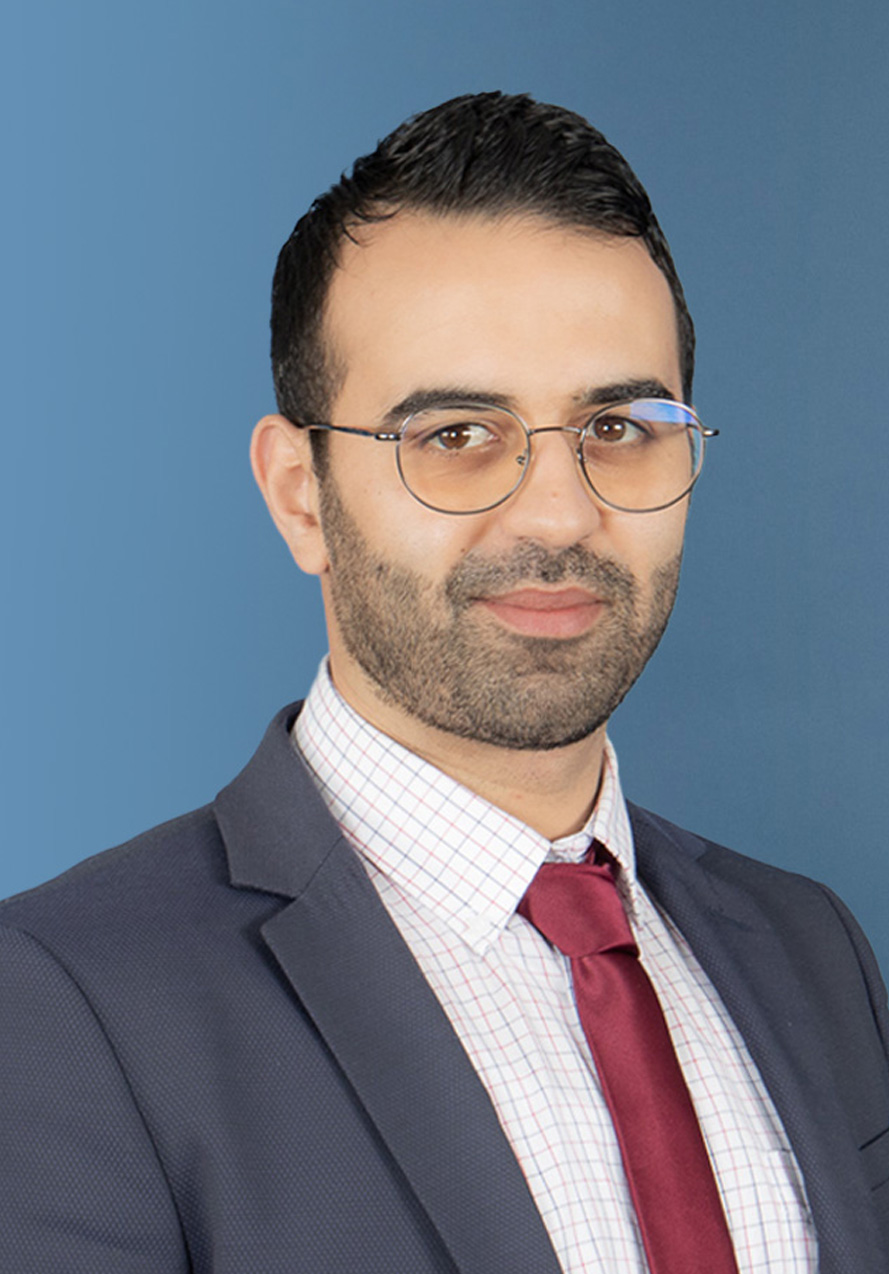
Badr Mandri
Economist
Badr Mandri is a Senior Economist at the Policy Center for the New South (PCNS), after an experience at Morocco's Haut-Commissariat au Plan (HCP). His research focuses primarily on macroeconomics, commodity markets, and development economics, having notably directed a collective volume on human capital. He also serves as an executive trainer at Mohammed VI Polytechnic University (UM6P), delivering specialized programs on public finance and fiscal policy for public sector professionals.Badr Mandri holds a Master's degree in Applied Economics from Mohammed V University in Rabat. ...

RELATED CONTENT

  • From

    17
    9:00 am November 2026
    In person registrationOnline registrationIndustrialization in North Africa is entering a new phase shaped by global megatrends, the green and digital transitions, evolving value chains, and the growing need for resilient and competitive production systems.Against this backdrop, the Policy Center for the New South and the United Nations Industrial Development Organization (UNIDO) are convening The Future of Industrialization: Building Future-Ready Industries in North Africa on November 17, 2026, at the Policy Center for the New South in Rabat.The event will present key insights from the Industrial Development Report 2026 (IDR26) and bring together policymakers, industry leaders and experts to discuss the region’s industrial opportunities, constraints and policy priorities. The ...
  • From

    11
    10:00 am November 2026
    Depuis 2021, le Policy Center for the New South, le Programme des Nations Unies pour le développement et le Groupe de la Banque mondiale portent conjointement l’initiative « Parlons Développement », une plateforme de réflexion collective sur les enjeux du développement durable au Maroc. Organisée avec différents partenaires, notamment du monde académique et de la société civile, cette plateforme destinée à la jeunesse vise à rapprocher les débats stratégiques de ses préoccupations et à favoriser le dialogue autour de réponses concrètes aux défis du développement.Dans cette continuité, la 25ᵉ édition de « Parlons Développement », organisée en partenariat avec la Faculté des Sciences Juridiques, Économiques et Sociales de l’Université Mohammed Premier d’Oujda, sera consacrée au ...
  • Authors
    Aziz Ajbilou
    Ouidade Sabri
    November 4, 2026
    School dropout remains a major challenge for education systems and public policy, with lasting consequences for human capital, labor market integration, social cohesion, and long-term economic growth. Despite sustained efforts to expand access to schooling, many countries continue to experience high dropout rates, particularly at key transition points in lower- and uppersecondary education. Policy responses have often relied on fragmented, sector-specific interventions—addressing ed ...
  • Authors
    Bambang Brodjonegoro
    November 2, 2026
    This policy note was published as part of the T20 U.S. 2026 Workstreams, under the workstream “Fostering Trade and People-Centered Economic Growth,” which brings together policy experts to develop recommendations for G20 policymakers. The Group of Twenty (G20) accounts for most of the world’s output, yet its decisions shape the prospects of 174 United Nations Member States without G20 membership, among them the great majority of least developed countries and small states. Many ...
  • Authors
    October 27, 2026
    Mozambique’s extractive-industry development model is a textbook case of how enormous FDI funds derived from its rich mineral base have not been leveraged to   promote inclusive economic growth and generate food security for all. It is a textbook case of the resource curse.  Instead, only a few have benefitted, leaving the poor and vulnerable, who constitute the vast majority, to struggle unassisted. These include smallholders in subsistence-oriented agriculture ...
  • October 23, 2026
    In this episode, Mehran Haghirian explores the global economic consequences of disruptions in the Strait of Hormuz, beyond oil and gas. He examines their impact on trade, fertilizer suppl ...
  • October 15, 2026
    The Policy Center for the New South, in partnership with The Asian Network, is organizing a webinar titled “Emerging Powers and the Remaking of Global Order” to examine the growing role of emerging powers and the Global South at a time of profound transformation in the international sys...
  • October 14, 2026
    في ظل التوترات الجيوسياسية المتصاعدة، تتغير طرق التجارة العالمية وتتبدل معها موازين الممرات الاستراتيجية. تفتح هذه الحلقة من «حديث الثلاثاء» النقاش حول التقاء المسارات البحرية والبرية داخل هذه الممرات، والعوامل التي تتحكم في طبيعة السلع التي تعبرها. وتبحث كذلك في ما يمكن للمغرب أن يجنيه...