The impact of COVID-19 in Ethiopia and Africa - Interview of Yonas Adeto by Mohammed Loulichki

April 9, 2020

‪In an interview with Mohammed Loulichki, the director of the Institute for Peace and Security Studies, Yonas Adeto, gives his thoughts on the measures taken in Ethiopia and Africa.

Speakers
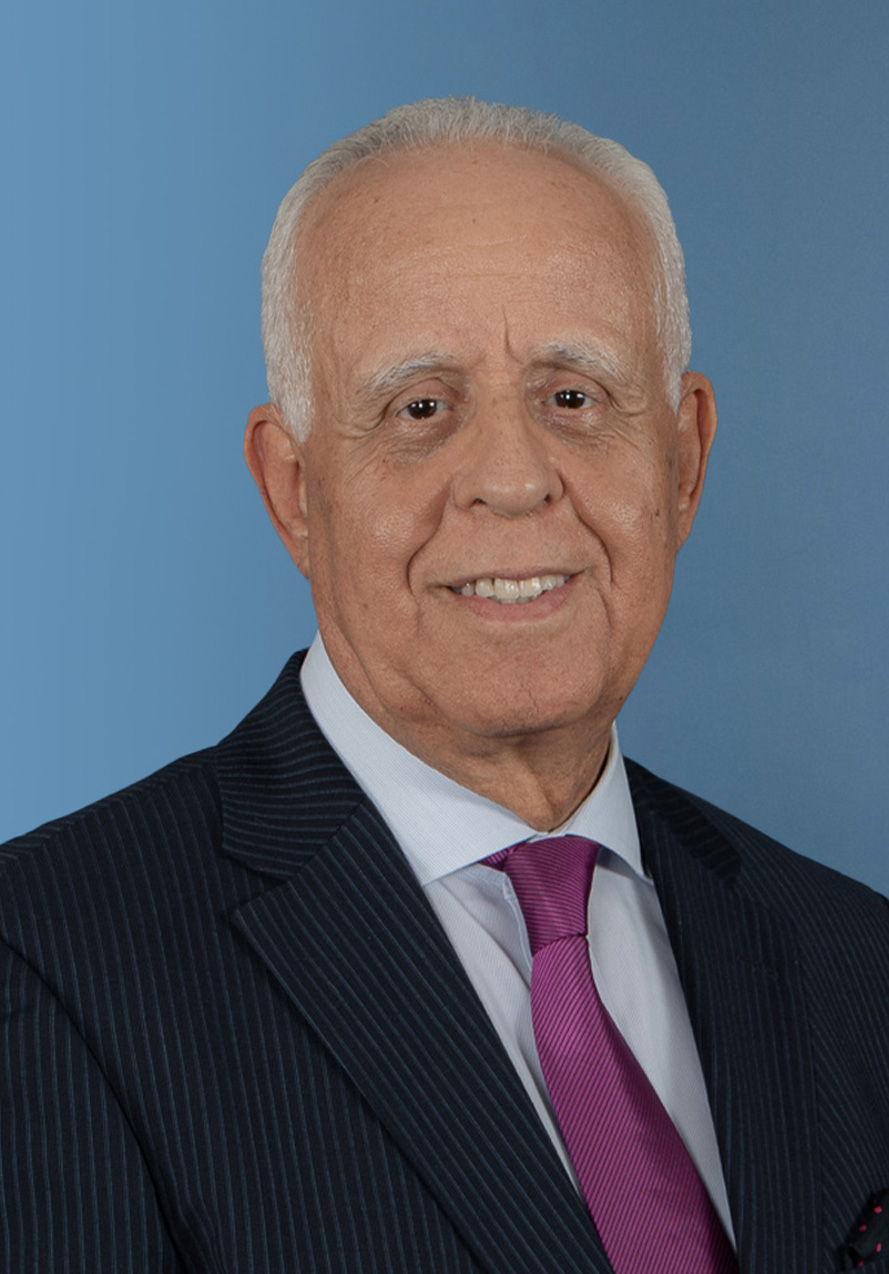
Mohammed Loulichki
Senior Fellow
Mohammed Loulichki is a Senior Fellow at the Policy Center for the New South and an Affiliate Professor at Mohammed VI Polytechnic University. He brings over 40 years of comprehensive experience in diplomacy, conflict resolution, and human rights. He has served in various roles including as a member and Deputy Head of the Moroccan delegation to the 3rd Conference on the Law of the Sea (1982-1990), Head of the Department of Legal Affairs and Treaties at the Ministry of Foreign Affairs (1988-1991), and General Director for Multilateral Affairs in the same ministry (2003-2006).   He also acted as Morocco's Ambassador to Hungary, Bosnia-Herzegovina, and Croatia (1995-1999), and was the Moroccan Government's Ambassador Coordinator with MINURSO (1999-2001). Furthermore, he se ...
Yonas Adeye Adeto
Commissioner, the Ethiopian National Dialogue Commission and Former Director, Institute for Peace and Security Studies (IPSS)
Associate Professor of Peace Studies, Former Director, Institute for Peace and Security Studies (IPSS), Addis Ababa University (AAU); Current Commissioner, the Ethiopian National Dialogue Commission (ENDC). He has published peer reviewed articles in international journals, and edited book chapters on: Peacebuilding, Conflict Resolution, Security Sector Governance, Peace Education, Preventing Violent Extremism/Terrorism, Diplomacy, International Relations and Global as well as Regional Security. He has taught at Addis Ababa University over twenty-five years and is currently offering various courses related to theories, issues and praxis of Peace, Global and Regional Security to MA and PhD programmes at IPSS and elsewhere in Africa and beyond. Dr. Adeto holds a PhD in Peace Stud ...


RELATED CONTENT

  • Authors
    March 16, 2022
    The 2021 German federal election brought about a historic reshuffle of the political parties’ hierarchy in Europe’s biggest economy. The Social Democratic Party are back in control of the Chancellery for the first time since 2005, as part of a three-party coalition at the federal level with the Greens and the Liberals, a first in Germany’s post-war history. Now, the federal government has turned its gaze towards its founding mission: more progress. The first 100 days of the three-pa ...
  • Authors
    Dominique Lecompte
    Thierry Vircoulon
    March 14, 2022
    Although it has largely gone unnoticed in France, the agreement signed on December 3, 2020 between the European Union (EU) and the Organisation of African, Caribbean and Pacific States (ACP) is a major shift in the long-standing relations between the EU and countries in the Global South. The EU established a development assistance policy as early as the Treaty of Rome in 1957, signed the first cooperation agreement in 1963, and nowadays is often the largest donor to these countries, ...
  • Authors
    March 14, 2022
    Ce Policy Paper explore les enjeux de la maritimisation du monde et les opportunités qui se présentent au Maroc et les menaces auxquelles le Royaume fait face sur sa façade atlantique. Nous nous appuyons sur les opportunités que représentent la côte Atlantique pour le Maroc et, plus globalement, pour le continent africain, tant au niveau du commerce de biens et de marchandises qu’aux niveaux logistique et portuaire. Enfin, ce Papier insiste sur l’importance de la jonction entr ...
  • Authors
    March 11, 2022
    The pros and the cons of regional market integration are well exemplified by the experience of Uruguay, a small, open economy in MERCOSUR, which is a highly protectionist trade bloc, dominated by Argentina and Brazil. With access to such large markets, Uruguay did raise its growth rate during the first decade of MERCOSUR, the 1990s. However, market integration as implemented in MERCOSUR was also problematic in that Uruguay suffered from the high protectionism of Argentina in the for ...
  • March 10, 2022
    Africafé est une émission du Policy Center for the New South qui décrypte l’actualité des organisations africaines et de l’Afrique. A travers de courtes interviews, l’émission tente de proposer d’aborder de manière pédagogique les enjeux des organisations africaines et l’actualité du co...
  • Authors
    March 9, 2022
    It was a grey day with a drizzle here and a drizzle there when mourners gathered at St George’s Cathedral in a usually sunny Capetown to pay their last respect to the Arch Bishop Desmond Tutu, the moral force against Apartheid struggle in South Africa was subdued and thoughtful as human beings when death and a rendezvous with eternity have been called. South Africa’s president Cyril Ramaphosa led his nation and the world in remembering Tutu. He described him as “our moral compass a ...
  • March 9, 2022
    The Global Terrorism Index (GTI) is an annual report produced by the Institute for Economics & Peace (IEP). Now on its 9th edition, the GTI provides a comprehensive summary of the key global trends and patterns in terrorism. It analyses a number of vital aspects of terrorism such as...
  • Authors
    March 8, 2022
    The contrast between Argentina’s rich natural resource endowment and its poor economic performance has been the focus of much socio-political and economic analysis. When it created MERCOSUR with its immediate neighbors, Brazil, Uruguay, and Paraguay in 1991, it had access to a trading bloc with a combined GDP of US$ 419 trillion (2019), making it the 5th largest economy in the world. Joining the MERCOSUR was a break from its protectionist past. But it did not last. Argentina greatl ...
  • Authors
    Isabelle Saint-Mézard
    Françoise Nicolas
    March 7, 2022
    Due to historical as well as geographical reasons, India and East Africa have long been close partners. In the recent period however, and even more so since the early 2000s, these ties have tightened as a result of combined efforts by the government of India and its business community. The presence of communities of Indian origin in several East African countries has also acted as a catalyst. East Africa is perceived as a valuable partner both by Indian authorities and by Indian pr ...