
The impact of COVID-19 in Ethiopia and Africa - Interview of Yonas Adeto by Mohammed Loulichki

April 9, 2020

‪In an interview with Mohammed Loulichki, the director of the Institute for Peace and Security Studies, Yonas Adeto, gives his thoughts on the measures taken in Ethiopia and Africa.

Speakers
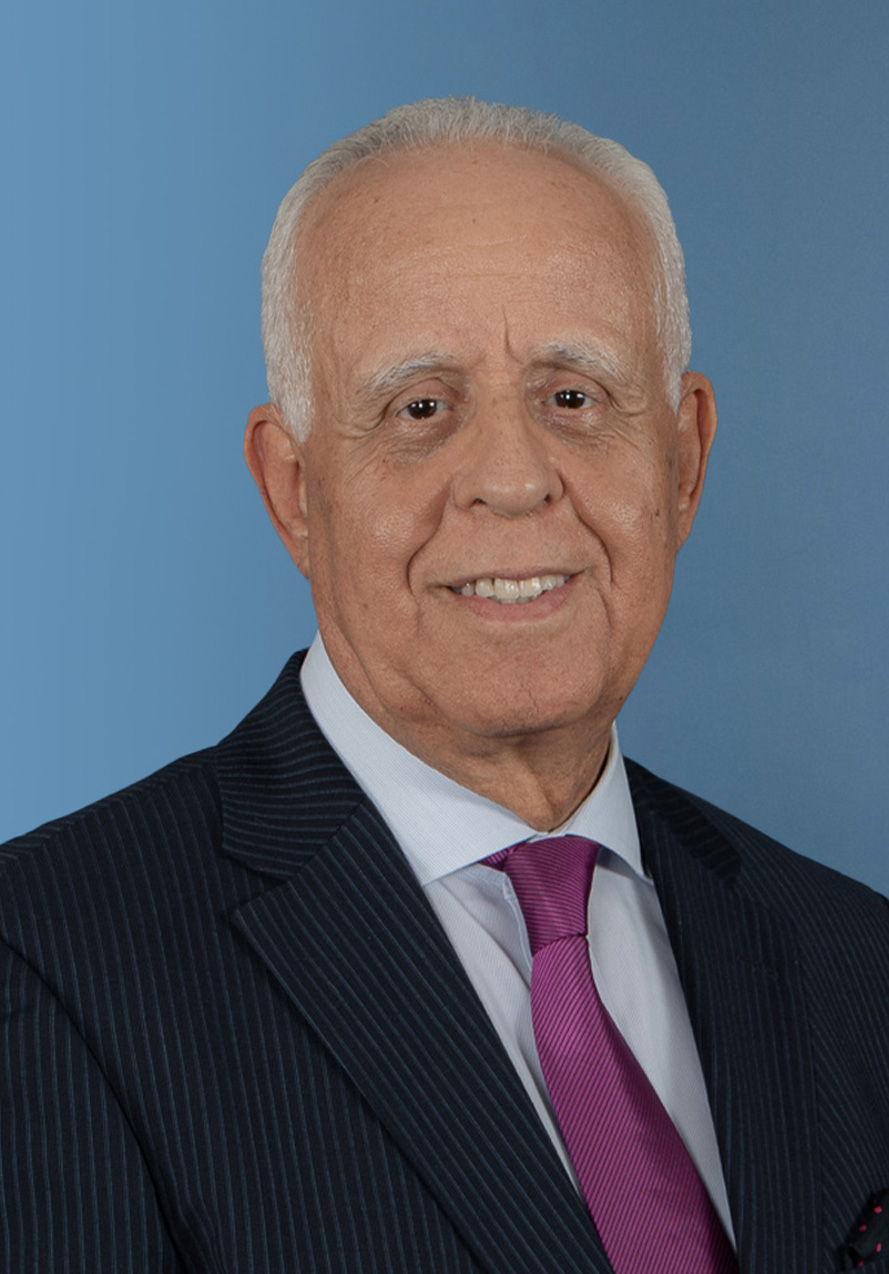
Mohammed Loulichki
Senior Fellow
Mohammed Loulichki is a Senior Fellow at the Policy Center for the New South and an Affiliate Professor at Mohammed VI Polytechnic University. He brings over 40 years of comprehensive experience in diplomacy, conflict resolution, and human rights. He has served in various roles including as a member and Deputy Head of the Moroccan delegation to the 3rd Conference on the Law of the Sea (1982-1990), Head of the Department of Legal Affairs and Treaties at the Ministry of Foreign Affairs (1988-1991), and General Director for Multilateral Affairs in the same ministry (2003-2006).   He also acted as Morocco's Ambassador to Hungary, Bosnia-Herzegovina, and Croatia (1995-1999), and was the Moroccan Government's Ambassador Coordinator with MINURSO (1999-2001). Furthermore, he se ...
Yonas Adeye Adeto
Commissioner, the Ethiopian National Dialogue Commission and Former Director, Institute for Peace and Security Studies (IPSS)
Associate Professor of Peace Studies, Former Director, Institute for Peace and Security Studies (IPSS), Addis Ababa University (AAU); Current Commissioner, the Ethiopian National Dialogue Commission (ENDC). He has published peer reviewed articles in international journals, and edited book chapters on: Peacebuilding, Conflict Resolution, Security Sector Governance, Peace Education, Preventing Violent Extremism/Terrorism, Diplomacy, International Relations and Global as well as Regional Security. He has taught at Addis Ababa University over twenty-five years and is currently offering various courses related to theories, issues and praxis of Peace, Global and Regional Security to MA and PhD programmes at IPSS and elsewhere in Africa and beyond. Dr. Adeto holds a PhD in Peace Stud ...


RELATED CONTENT

  • October 2, 2025
    Cet article interroge la montée d’une fracture intergénérationnelle à l’ère numérique, en articulant les apports de la sociologie des générations, de la psychanalyse et de la psychopolitique. Après une revue critique des taxonomies (Baby-boom, X, Y, Z, Alpha), des notions de digital natives/ migrants et de leurs limites analytiques, l’étude propose un cadre théorique intégré où trois mécanismes psychiques — projection, régression et parricide symbolique — éclairent la manière dont l ...
  • Authors
    Khadija Mamouni
    September 30, 2025
    This article analyzes the role played by Türkiye as an emerging “middle power”[1], in Africa over the last two decades. It argues that a certain discontinuity can be identified in Türkiye’s foreign policy approach in Africa. The approach has shifted from short-term involvement with African nations to more focused, constructive, vision-oriented partnerships. In addition, Türkiye’s gradual rapprochement with Africa began with a soft-power approach through a humanitarian, cultural, and ...
  • September 30, 2025
    This episode explores Morocco’s green hydrogen offer, focusing on governance frameworks, ecosystem development, and flagship projects. It highlights strategic national initiatives and partnerships with industry stakeholders, while addressing technological advances, regulatory hurdles, a...
  • September 26, 2025
    This episode explores Morocco’s comprehensive energy transition strategy, emphasizing sovereignty, competitiveness, and decarbonization. It highlights infrastructure priorities, including grids, ports, storage, and LNG, and situates green hydrogen as a key lever within the energy mix. T...
  • September 26, 2025
    Morocco’s strong macroeconomic performance over the past two decades—anchored in infrastructure modernization, industrial diversification, and renewable energy leadership—has positioned it as a success story in the Global South. Yet these achievements mask persistent regional disparities that undermine inclusive development. Coastal regions such as Casablanca-Settat and Tangier-Tétouan-Al Hoceima dominate economic activity, while hinterland and southern provinces face structural dis ...
  • September 26, 2025
    Rida Lyammouri, Senior Fellow at the Policy Center for the New South, examines the rise of drone use by non-state armed groups in the Sahel. The discussion highlights how civilian drones ...
  • September 25, 2025
    This episode examines the African Peace and Security Architecture  amid evolving threats, questioning its effectiveness against modern crises such as terrorism, environmental stress, disinformation, and cyber risks. It highlights institutional and political gaps, exploring the chal...
  • September 24, 2025
    Il y a presque deux ans, le Burkina Faso, le Mali et le Niger ont quitté la CEDEAO (Communauté économique des États de l’Afrique de l’Ouest) - Organisation régionale regroupant quinze pays- pour créer un nouveau groupement d’intégration: l’Alliance des États du Sahel (AES).  Les motivations des trois pays ne sont pas conjoncturelles. Elles reflètent les difficultés de l’Organisation régionale à accompagner les pays en question dans leur quête de sécurité et de développemen ...
  • September 24, 2025
    The African Atlantic Gas Pipeline will transform energy access across West Africa and link the continent to Europe. Stretching over 5,700 km, it will deliver 30 billion cubic meters of gas per year across Africa and 18 billion to Europe, providing electricity for over 400 million people...
  • September 24, 2025
    This episode explores how green hydrogen can drive Morocco’s energy transition and economic development, with a focus on export opportunities to Europe, integration into industrial value chains, and the development of supporting infrastructure. It highlights financing mechanisms and tec...