
حديث الثلاثاء: تحليل الاستراتيجية الوطنية للتحول الرقمي 2030

December 3, 2024

نستضيف في هذه الحلقة الأستاذة رجاء بنسعود، المتخصصة في قانون الأعمال والتحول الرقمي، لنسلط الضوء على مستقبل التحول الرقمي في المغرب من خلالاستراتيجية "المغرب الرقمي 2030". سنتناول أبرز الإنجازات التي حققتها المملكة في هذا المجال، كما سنناقش الأهداف الطموحة لهذه الاستراتيجية والتحديات الكبرى التيتقف أمام تحقيقها.

Speakers
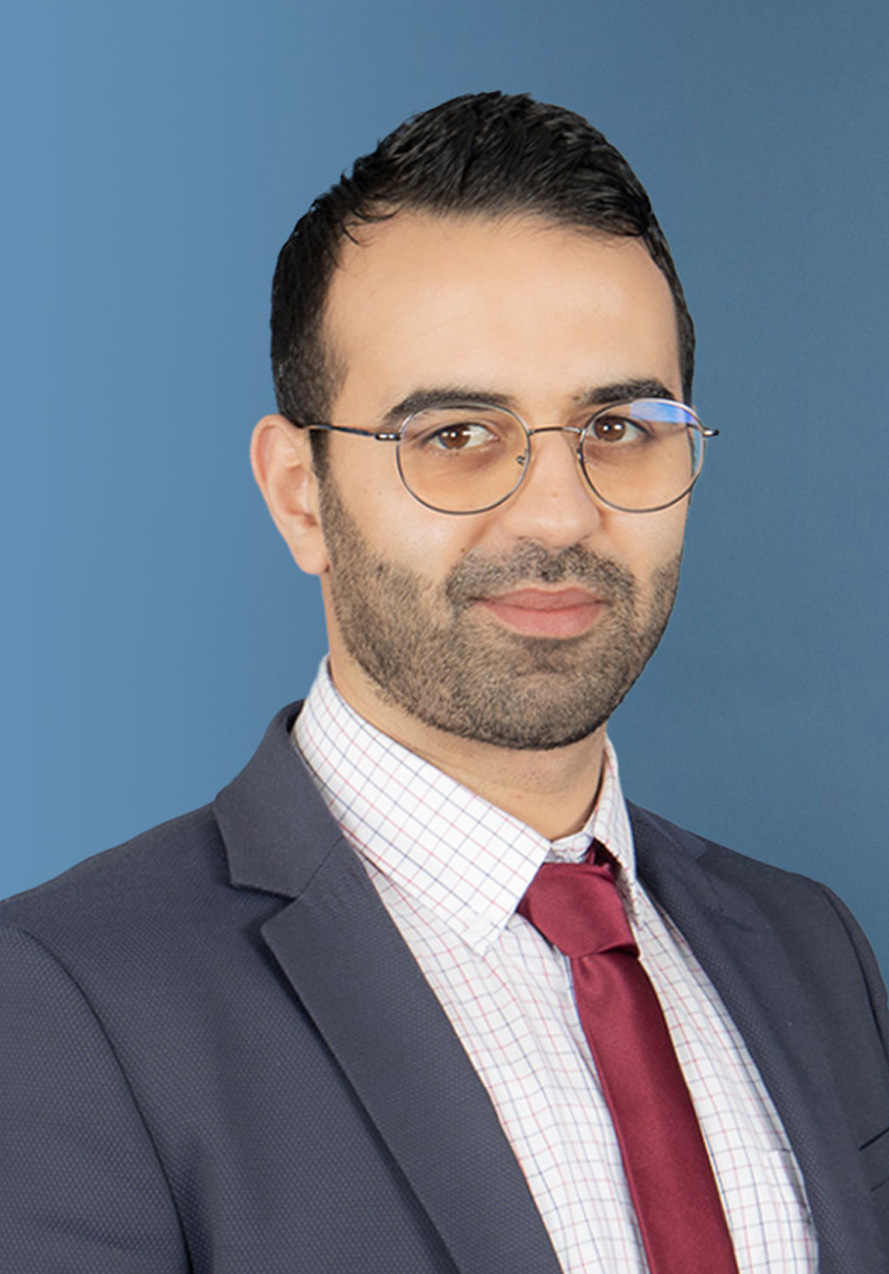
Badr Mandri
Economist
Badr Mandri is a Senior Economist at the Policy Center for the New South (PCNS), after an experience at Morocco's Haut-Commissariat au Plan (HCP). His research focuses primarily on macroeconomics, commodity markets, and development economics, having notably directed a collective volume on human capital. He also serves as an executive trainer at Mohammed VI Polytechnic University (UM6P), delivering specialized programs on public finance and fiscal policy for public sector professionals.Badr Mandri holds a Master's degree in Applied Economics from Mohammed V University in Rabat. ...
Raja Bensaoud
Independent scholar
Raja Bensaoud is a private law jurist, specializing in business and digital law. Her teaching career leads her to share her knowledge at the Royal College of Higher Military Studies as well as at several institutions of excellence such as Hassan 1st University and ISCAE. Co-founder of the Digital Act Think Tank, she also contributes her expertise to the Legal Commission of the Chambre Française de Commerce et d’Industrie du Maroc (CFCIM). Her executive experience includes roles as ministerial chief of staff, director at Royal Air Maroc, and vice president of Association of Businesswomen of Morocco (AFEM). She has actively participated in several national commissions for legal reform and codification, particularly for the Maritime Code, Free Zone Law, and Ethics of AI. ...

RELATED CONTENT

  • Authors
    Amin El-Yousfi
    September 1, 2020
    On February 18, 2020, a few weeks before COVID-19 became the number one concern for politicians and the public, Emmanuel Macron delivered a long-awaited speech in Mulhouse in which he emphasized the importance of fighting what he called “Islamist separatism”. Many analysts were surprised by this declaration which differed from previous statements he’d made, following his election, about the need to institutionalize Islam. This policy brief explores the background to the institutiona ...
  • Authors
    August 24, 2020
    During the medal ceremony at the Olympic Stadium in Mexico City on October 16, 1968, two Black American athletes, Tommie Smith and John Carlos, each raised a gloved fist during the playing of the U.S. national anthem. The two Americans received their medals shoeless, but wearing black socks to represent black poverty. Smith wore a black scarf around his neck to present black pride. Carlos, who won a bronze medal, wore a necklace of beads, which he said “were for those individua ...
  • August 17, 2020
    The global spread of COVID-19 has caused widespread fear and anxiety, first because of the fear of infection, the anguish of death, and then because of enduring uncertainties about the nature of the epidemic, its modes of transmission, its degree of severity, and the effectiveness of therapeutic intervention protocols to save those infected. A distinction should be made between two situations that are often confused: on the one hand, the psychological effects caused by the fear of t ...
  • Authors
    August 10, 2020
    While many states are adopting strict measures including containment and even border closures, some countries have used surveillance technologies to control the spread of the virus, and others are considering similar solutions. The most widespread device is the geolocation of smartphone data, digital tracing, cybersurveillance and facial recognition, the aim of which is to detect the movements of potentially contaminated people, warn populations likely to have been exposed to the vi ...
  • Authors
    August 10, 2020
    The International Monetary Fund (IMF) released, on August 4th, its ninth annual External Sector Report, where current account imbalances and asset-liability stocks of 30 systemically large economies are approached. This time the report went beyond looking the previous year and tried to anticipate what will be some of the impacts of the still on-going COVID-19 crisis. The report shows that the global economy entered the COVID-19 crisis with a configuration of external imbalance ...
  • Authors
    August 5, 2020
    La pandémie Covid-19 a éclairé notre connaissance sur les limites de certains concepts pour saisir les vulnérabilités sociales. Elle invite les chercheurs et les décideurs à prendre une certaine distanciation avec les catégories conventionnelles, et à engager un débat sur la mesure de la complexité sociale. Combien y-a-t-il de pauvres au Maroc ? La pauvreté commence où et s’achève quand ? Les pauvretés monétaires et multidimensionnelles désignent-elles les mêmes réalités que seule l ...
  • Authors
    August 3, 2020
    It was notthe way you would expect a scientist to be celebrated. InStyle, an American fashion magazine showed on its cover Anthony Fauci, America’s frontline warrior against the COVID-19 virus. Fauci has been director of the National Institute of Allergy and Infectious Diseases since 1984, and has been honored by presidents since Ronald Reagan, battling against HIV/Aids, SARS, swine flu, MERS, and Ebola. He is, BBC News stated, “the face of America’s fight agains ...
  • Authors
    August 3, 2020
    Le Registre social unique (RSU) est un mécanisme de ciblage social dont les avantages sont attendus par toutes les parties prenantes impliquées dans la réforme des filets sociaux. Son adoption n’est pas une fin en soi. Outil technique, il est au service d’une finalité première, celle de gérer l’affectation des ressources publiques consacrées à la lutte contre la pauvreté et la vulnérabilité, dans un double souci d’efficacité et d’équité. L’atteinte de cette finalité est conditionnée ...
  • Authors
    Jaime Bonet-Morón
    Diana Ricciulli-Marín
    Gerson Javier Pérez-Valbuena
    Luis Armando Galvis-Aponte
    Inácio F. Araújo
    Fernando S. Perobelli
    July 29, 2020
    The aim of this paper is to assess the regional economic impact of the lockdown measures ordered by the national government to prevent the spread of COVID-19. Using an input–output model, we estimate the economic loss of extracting groups of formal and informal workers from different economic sectors. Results show monthly economic losses that represent between 0.5% and 6.1% of national GDP, depending on the scenario considered. Accommodation and food services, real estate, administr ...