
(EN) An Annual Report on Wider Atlantic Perspectives and Patterns

December 12, 2019

Moderator Marcus Vinicius de Freitas, Senior Fellow, Policy Center for the New South Speakers Anabel González, Former Minister of Foreign Trade, Costa Rica Len Ishmael, Senior Fellow, Policy Center for the New South Rida Lyammouri, Senior Fellow, Policy Center for the New South Olisaeloka Okocha, Managing Partner and Co-Founder, PS Nutraceuticals International Aminata Touré, Former Prime Minister, Senegal

Speakers
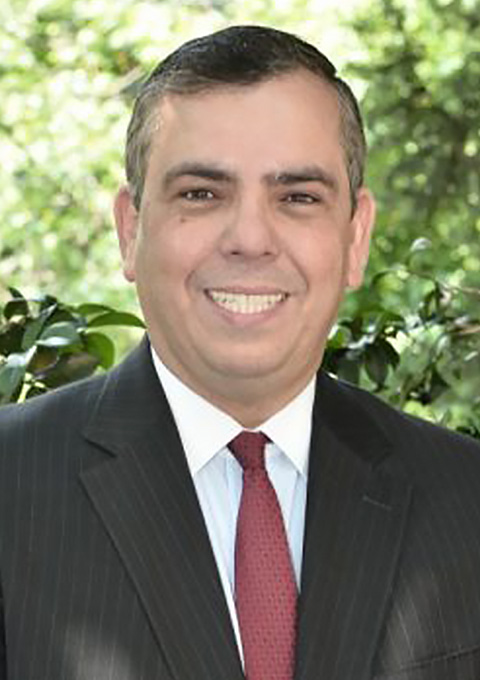
Marcus Vinicius de Freitas
Senior Fellow
Marcus Vinicius De Freitas is Senior Fellow at Policy Center for the New South, focusing on International Law, International Relations and Brazil, and is currently a Visiting Professor of International Law and International Relations at China Foreign Affairs University in Beijing, China. Previously, he was a Professor of The Armando Alvares Penteado Foundation in Sao Paulo, where he served as the coordinator of their International Relations Program from December 2012 until December 2013. He was president of the Sao Paulo Directorate of the Progressive Party, having run for vice governor of the State of Sao Paulo in 2010, where his party polled in third place with more than 1.2 million votes. He also served as the Administrative Director of the Sao Paulo Metropolitan Housing Co ...
Len Ishmael
Senior Fellow
Ambassador Dr. Len Ishmael is an affiliate Professor at Mohammed VI Polytechnic University teaching the MSc course New South Dynamics, as well as Geopolitics and Geo-economics in the Joint HEC Paris/Public Policy School Executive Program. She is a Senior Fellow of the Policy Center for the New South, Distinguished Visiting Scholar of the German Marshall Fund of the United States of America and a Senior Fellow of the European Centre for Development Policy Management. Dr. Ishmael is the Global Affairs Advisor and Head of the Expert Groups of the Brussels Diplomatic Academy of the Vrije Universiteit Brussel (VUB). She is the former Ambassador of the Eastern Caribbean States to the Kingdom of Belgium and European Union, past President of the 79-member African, Caribbean & ...
Aminata Toure
Former Prime Minister of Senegal
Dr. Aminata Toure, former Prime minister (2013) and former Minister of Justice (2012-13) of Senegal, trained as an economist in France and the United States. Previously, she worked for 20 years in the United Nations system, where she championed human rights and women’s rights. Toure has been involved in politics since her student years. In 2011, she left the UN to campaign for the then presidential candidate Macky Sall. Toure remains very active in promoting good governance and fighting impunity in Senegal and Africa in general. She was the head of the African Union Observation Mission for Mauritius general elections in 2014. ...
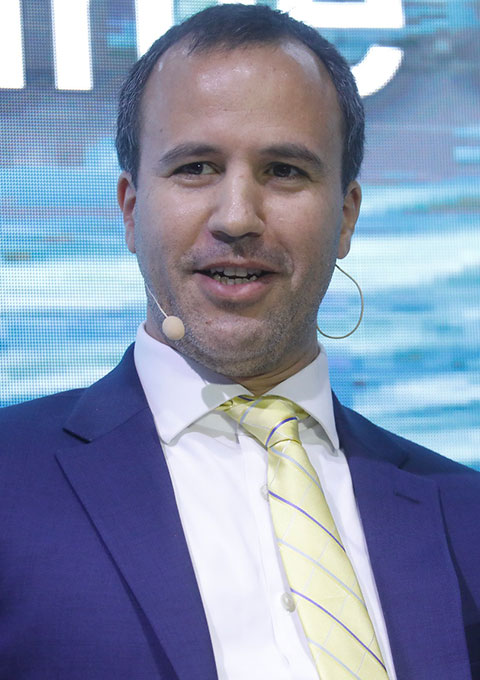
Rida Lyammouri
Senior Fellow
Rida Lyammouri is a senior fellow at the Policy Center for the New South (PCNS). He is also a senior West Africa and Lake Chad Basin researcher and advisor, with expertise in regional conflicts, violent extremism, climate change, migration, and trafficking. His research activities focus on geopolitics and international relations in the West African Sahel and Lake Chad Basin, regions he has worked on for 14 years, including in the field. He has extensive experience supporting both governmental and non-governmental organizations in the areas of international development, security, countering violent extremism and terrorism, preventing conflicts, ensuring humanitarian access, and migration. Mr. Lyammouri has contributed to in-depth research and analysis reports aiming at building ...
RELATED CONTENT

  • August 3, 2026
    This policy paper explores how China’s economic development model—rooted in pragmatism, long-term planning, and civilizational renewal—has become its most compelling soft power asset, particularly in the eyes of the Global South. While critically engaging with Joseph Nye’s original conception of soft power as a primarily cultural and normative force, the paper argues that China’s ability to transform itself from an impoverished postimperial state into the world’s largest trading nat ...
  • Authors
    Fadoua Ammari
    July 27, 2026
    Cet article évalue la pertinence du paradigme de la réconciliation pour analyser la rivalité maroco-algérienne. À partir d’une démarche qualitative, historico-interprétative et interdisciplinaire fondée sur un corpus raisonné de travaux académiques et de sources institutionnelles, il montre que cette conflictualité ne se réduit ni au différend du Sahara ni à un simple antagonisme bilatéral. Elle se construit à l’intersection de mémoires concurrentes, de mécanismes de sécuritisation, ...
  • Authors
    July 27, 2026
    Is Europe Prepared for War?European public opinion is moving from treating a major conflict as unthinkable to regarding it as a possibility for which governments must prepare. Attention is increasingly focused on Russian hybrid operations, vulnerabilities in critical infrastructure and the risk of fragmentation within NATO. European defence policy is consequently undergoing a rapid transition from post-Cold War complacency towards preparations for high-intensity warfare. Recent ...
  • Authors
    July 17, 2026
    The close relationship between energy and geopolitics is well established. The same holds true for several armed conflicts. In recent years, however, the conflict most closely intertwined with energy has been the 2026 Iran War, which began on February 28. A ceasefire has been in effect since April 8, and a Memorandum of Understanding (MoU) was signed by Iran and the United States on June 17. Nevertheless, as demonstrated by Iran's attacks on commercial vessels and recent U.S. strike ...
  • Authors
    July 17, 2026
    Les relations, très étroites, entre l’énergie et la géopolitique sont bien connues. Cela vaut aussi pour plusieurs conflits armés. Mais, dans la période récente, le conflit le plus lié à l’énergie est la guerre d’Iran de 2026, qui a débuté le 28 février. Un cessez-le-feu est en vigueur depuis le 8 avril et un protocole d’accord a été signé le 17 juin par l’Iran et les États-Unis. Mais, comme le montrent les attaques de l’Iran contre des navires et les frappes américaines de ces dern ...
  • Authors
    July 15, 2026
    We Are Watching You In April 2026, the UK Ministry of Defence revealed that it had tracked a covert Russian submarine operation apparently intended to map critical undersea cables and pipelines in the North Atlantic and the North Sea. A Russian attack submarine and two specialised intelligence vessels operated by the Main Directorate of Deep-Sea Research, commonly known as GUGI, were reportedly monitored for four weeks by the Royal Navy, including HMS St Albans and P-8 Poseidon ...
  • Authors
    July 14, 2026
    Avec la capitale Pékin comme acteur principal de la politique étrangère chinoise, l’engagement de la Chine en Afrique ne peut plus être appréhendé à travers le seul prisme de l’État central. Suite aux réformes de décentralisation engagées en 1978, les gouvernements provinciaux de l’Empire du Milieu jouent un rôle de plus en plus visible et structurant, en s’affirmant en tant qu’acteurs à part entière de la coopération internationale. Ils interviennent, entre autres domaines, dans le ...
  • Authors
    July 13, 2026
    On “marinetraffic.com”, thousands of triangles fill a map of the world’s ports and oceans, each representing the active location and destination of a ship, reported the “McGill International Review” (April 16, 2026) adding,” suspicious tankers are plentiful among them.” One of these vessels, marked by a red triangle, appears, zoomed, as “Monique”, a twenty-year-old vessel, aka Tokyo, Phuket and Elysia. Its old age and the frequent name change, suspects reporter Julnar Alzuki, “indic ...
  • July 10, 2026
    For much of the post-war period, the Global South was framed as an object of history, defined by dependency, constrained by structural asymmetries, and confined to the margins of global decision-making. That narrative, once empirically grounded, is now no longer adequate. A profound yet uneven transformation is underway. The Global South is no longer only reacting; it is increasingly shaping rules, institutions, and narratives.This Policy Brief argues that the Global South is thus t ...