
Emerging Markets Forum: General Overview and Current challenges

December 8, 2023

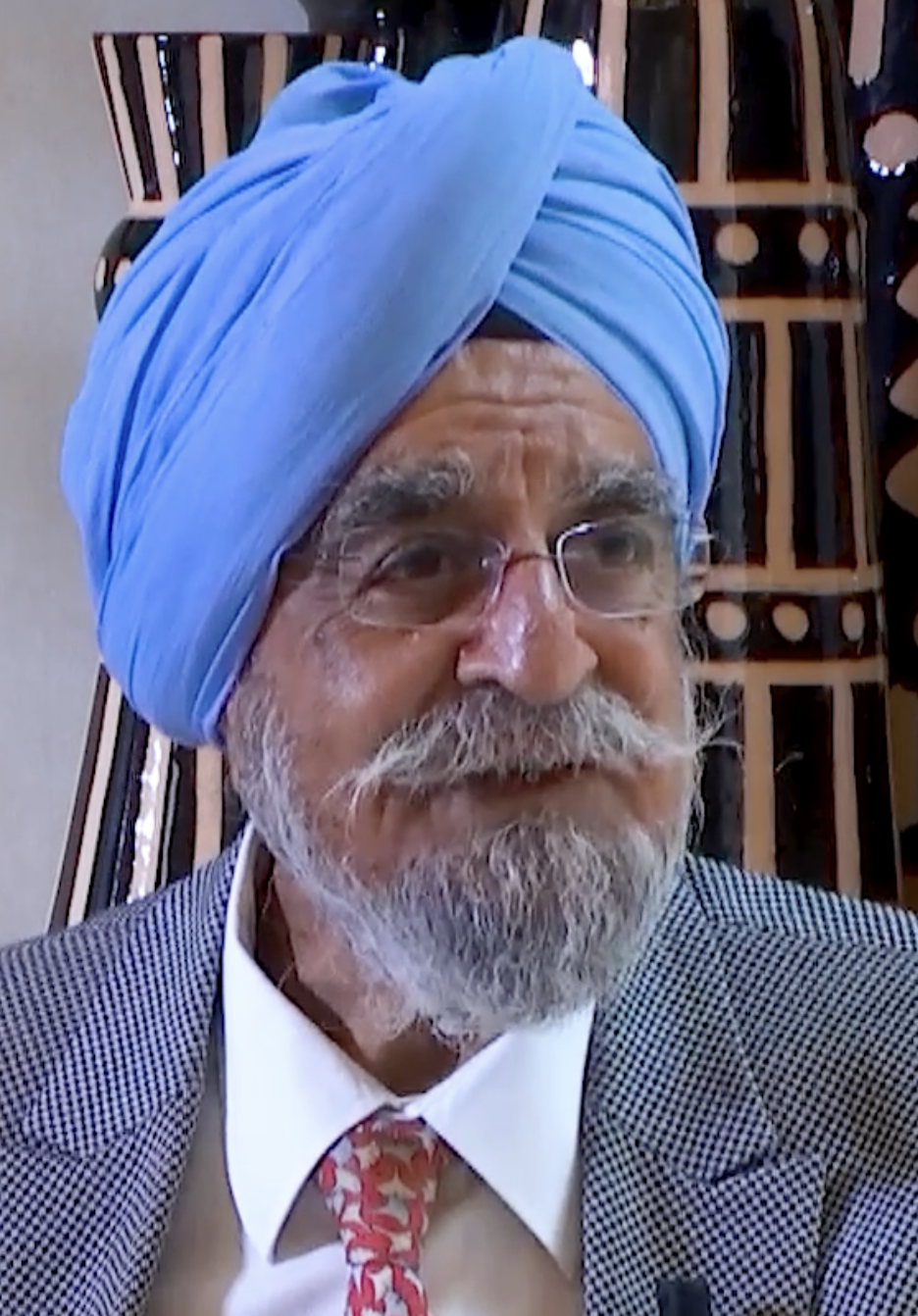
In this interview, Dr. Harinder Kohli, Founding Director and Chief Executive of the Emerging Markets Forum discusses the escalation of interest rates in the U.S. has consistently instilled a sense of apprehension in emerging markets, given the conventional outcome of capital outflows redirecting towards advanced economies. With the Federal Reserve embarking on rate hikes to counter an uncommon surge in inflation exceeding its target, an immediate inquiry arises: how have emerging economies navigated these circumstances, and to what extent have they demonstrated resilience in recent months? The question of resilience assumes heightened significance, particularly in light of the fact that emerging economies have grappled with an unprecedented pandemic, compelling them to provide protection to millions of citizens.
Speakers
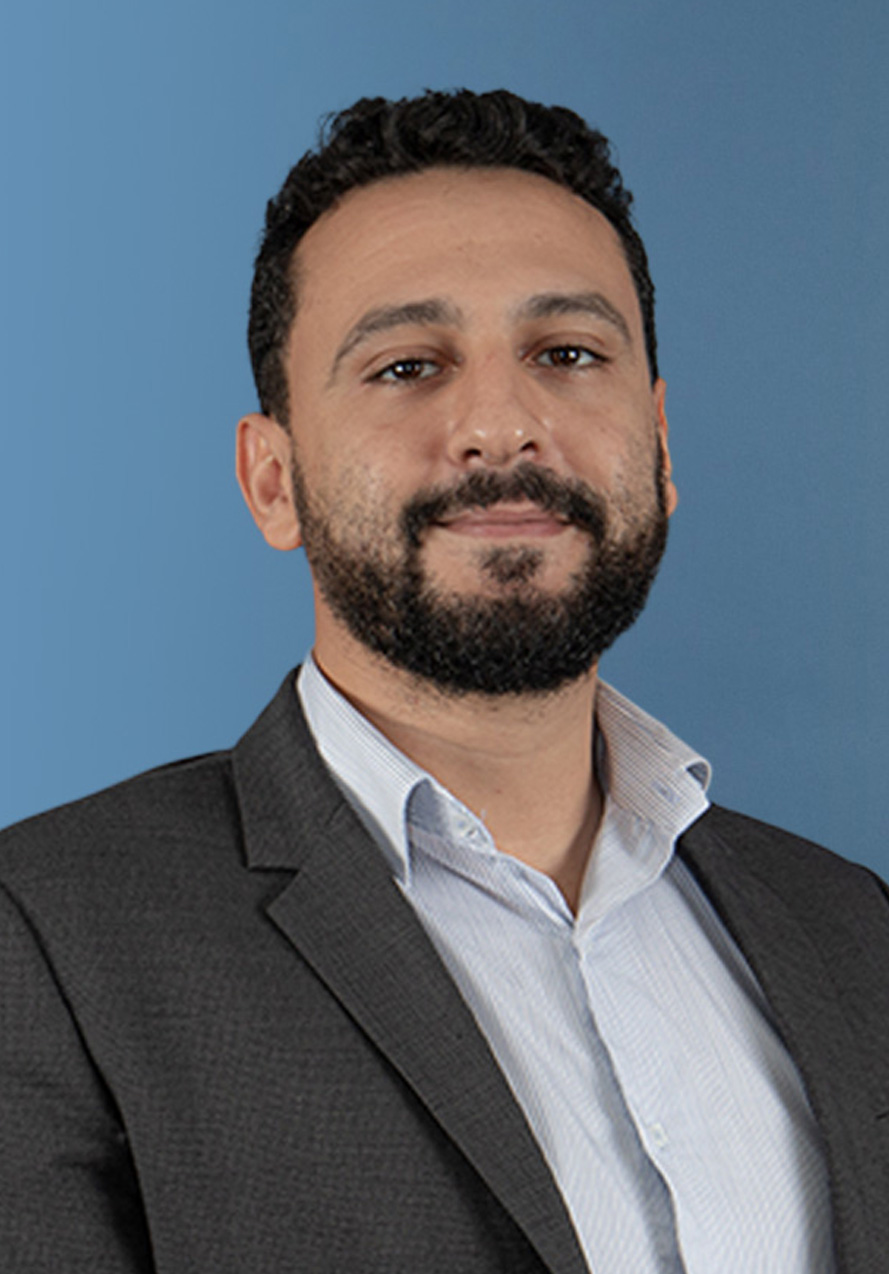
Akram Zaoui
Chargé de Mission to the Executive President
Akram Zaoui is a Senior International Relations Specialist and Chargé de Mission to the Executive President at the Policy Center for the New South (PCNS). Prior to this, he was Manager of Research Support and the Public Policy Lab at the PCNS. His main area of interest is the geopolitical economy of the Extended Middle East and North Africa (MENA) region. From 2018 to 2020, Zaoui was the coordinator of a network of 70+ civil society organizations (CSOs) across France, working with foundations, government, local communities, and the private sector. Zaoui holds a dual degree in corporate and public management from HEC Paris and Sciences Po, as well as a bachelor's degree (licence) in history from Université Paris 1 Panthéon-Sorbonne. He audited courses in Iranian and Shia Stud ...
Harinder Kohli
Founding Director and Chief Executive, Emerging Markets Forum (EMF)
...

RELATED CONTENT

  • December 22, 2025
    This paper presents the theoretical specification and current developments of a Spatial (Interprovincial) Computable General Equilibrium (SCGE) model for Morocco. The model is formulated as a Johansen-type CGE system, solved in linearized form, and is designed to analyze the regional and national impacts of policy shocks within an integrated interregional economic framework. The Moroccan economy is disaggregated into 72 provinces, 20 production sectors, multiple institutional agents ...
  • Authors
    Ahmed Ouhnini
    December 5, 2025
    “Uberization,” a term derived from the American company Uber in the early 2010s, initially refers to an economic model based on directly matching supply and demand through digital platforms. Rapidly popularized, the concept has expanded with Airbnb in accommodation, and then to a wide range of other sectors: food delivery, home services, e-commerce, and even traditionally regulated or corporatist professions. This neologism thus reflects a transformation of economic and social relat ...
  • Authors
    Ahmed Ouhnini
    December 5, 2025
    L’« uberisation », terme né du nom de l’entreprise américaine Uber au début des années 2010, désigne initialement un modèle économique fondé sur la mise en relation directe entre offre et demande via des plateformes numériques. Rapidement popularisé, le concept s’est élargi, avec Airbnb dans l’hébergement, puis à une multitude d’autres secteurs : livraison de repas, services à domicile, commerce en ligne, voire des métiers traditionnellement régulés ou corporatistes. Ce néologisme t ...
  • Authors
    December 3, 2025
     Global GDP growth has proven resilient in 2025, despite the shocks caused by the trade policies implemented by United States President Donald Trump in the first year after his return to office. The gloomy projections offered by multilateral and private institutions in the first quarter of 2025 have given way to revised levels mostly in the 2.5% to 3% range for the year. ...
  • Authors
    November 28, 2025
    The adoption of United Nations Security Council Resolution 2803 on November 17, 2025, endorsing the “Comprehensive Plan to End the Gaza Conflict,” is a step in the right direction, but it must be accompanied by the implementation of a Gaza development and post-conflict reconstruction program. Paragraph 6 of Resolution 2803 “calls upon the World Bank and other financial institutions to facilitate and provide financial resources to support the reconstruction and development of Ga ...
  • November 25, 2025
    This Policy Paper analyses the Fourth Industrial Revolution (4IR) through the critical lens of technological colonialism. It argues that the fusion of physical, digital, and biological technologies is not merely a technical phenomenon but a civilizational shift reshaping the foundations of global power. The article traces a historical continuum from previous industrial revolutions, demonstrating how patterns of inequality and extraction persist, now transposed into the digital realm ...
  • Authors
    November 21, 2025
    This report addresses the business environment in Brazil as one of the determinants responsible for the weak evolution of productivity in recent decades. After addressing this productivity performance, we define what constitutes the business environment, using as a reference the three ways in which the World Bank has been addressing the subject.Next, we highlight how the business environment affects productivity in a country. Finally, we review some recent reforms in the country's b ...
  • Authors
    Lahcen Oulhaj
    November 19, 2025
    La modélisation classique de la croissance repose sur des outils – notamment la fonction de production agrégée et la comptabilité de la croissance – dont les incohérences logiques et les ambiguïtés épistémologiques sont connues depuis la Controverse de Cambridge et les travaux d’Anwar Shaikh. Pourtant, ces failles continuent d’alimenter des raisonnements fallacieux dans le débat économique et les discours institutionnels. Cet article montre que la nature tautologique de ces outils n ...
  • November 18, 2025
    The meeting between Donald Trump and Xi Jinping in Busan, South Korea, was more than an exercise in diplomacy. It was an emblematic performance of a world in transformation. Behind the formalities, the cameras, and the studied smiles lay an unspoken recognition: the world is no longer unipolar. The era of American supremacy, sustained for decades through its economic reach, military presence, and ideological projection, is giving way to a more diffuse, multipolar reality. ...