
Small States & Great Power Relations: How do Caribbean SIDs Secure their Interests?

June 17, 2021

The Policy Center for the New South, in partnership with the Brussels Diplomatic Academy, will host a webinar under the theme “Small States & Great Power Relations: How do Caribbean SIDs Secure their Interests?”, scheduled on Thursday, June 17th, 2021 at 2pm Rabat time/ 3pm Brussels time. These are extraordinary and highly uncertain times. Great power rivalry and competition between the USA and China are at an all-time high; the world is still in the grips of an on-going pandemic. Post COVID-19 recovery will be a long drawn out process. In the midst of tensions between East and West there are some who argue that a bifurcation of global systems will take place as the World Order continues to evolve and global value chains experience some degree of uncoupling as a result of both the effects of the pandemic and existing geopolitical tensions. In an evolving international structure small states need all the friends they can find. They have few opportunities and weapons in the soft power tool kit with which to lobby for and protect their interests. Coalitions and alliances matter. In this era of heightened tensions during which the economic and social effects of the pandemic will be long lasting, small states such as the SIDS of the Caribbean need to tread wearily, not wishing to be caught in tensions between East or West. In such a world, how do they influence global policies and secure their interests? Can they?
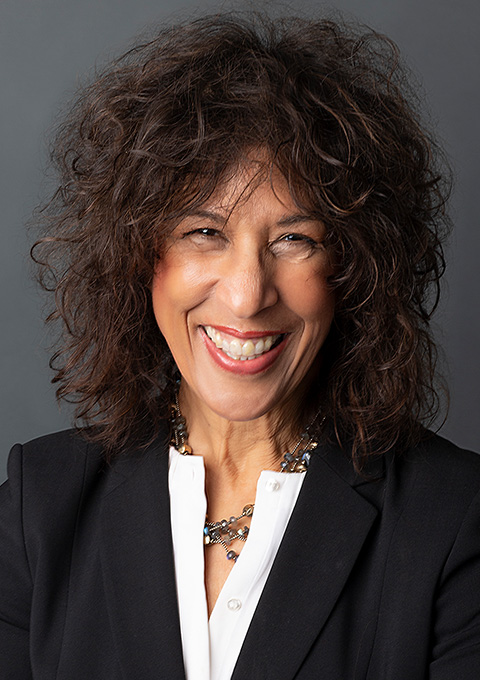
Speakers
Len Ishmael
Senior Fellow
Ambassador Dr. Len Ishmael is an affiliate Professor at Mohammed VI Polytechnic University teaching the MSc course New South Dynamics, as well as Geopolitics and Geo-economics in the Joint HEC Paris/Public Policy School Executive Program. She is a Senior Fellow of the Policy Center for the New South, Distinguished Visiting Scholar of the German Marshall Fund of the United States of America and a Senior Fellow of the European Centre for Development Policy Management. Dr. Ishmael is the Global Affairs Advisor and Head of the Expert Groups of the Brussels Diplomatic Academy of the Vrije Universiteit Brussel (VUB). She is the former Ambassador of the Eastern Caribbean States to the Kingdom of Belgium and European Union, past President of the 79-member African, Caribbean & ...
Eustace Wallace
Counsellor Political & Economic Affairs St Kitts & Nevis High Commission. Ottawa.
...

  • Authors
    February 12, 2026
    Divergent regulatory regimes for data, driven by different motivations, ranging from privacy protection in the European Union to information control in China, could eventually produce distinctively different, and possibly contradictory, bodies of data. Artificial-intelligence models trained on those datasets could produce differing and possibly even conflicting outputs. To the extent that AI outputs start to shape human perception and to influence decisions, in governments and ...
  • Authors
    February 11, 2026
    The U.S.–China technological rivalry has become a central axis of global economic and geopolitical competition. While the United States continues to lead in frontier innovation—most notably in advanced semiconductors and artificial intelligence (AI)—China has consolidated strengths in large-scale implementation, manufacturing capacity, and control over critical segments of global supply chains. These advantages are especially visible in clean energy technologies and in the processin ...
  • Authors
    Amine Ghoulidi
    February 5, 2026
    This Paper was originally published on orient-online.com  The Western Mediterranean’s exposure to the Sahel is usually framed in terms of security spillovers and crisis management. This paper argues that this framing misreads how Sahelian access conditions now shape Mediterranean integration. Morocco’s Atlantic Initiative is a state-led corridor strategy combining Atlantic port infrastructure, inland transit routes, and energy systems to connect landlocked Sahelian economi ...
  • February 4, 2026
    This article examines the quiet but profound implications of the erosion of U.S.-led hegemony for small and vulnerable states of the New South. While the post-1945 international order was never egalitarian, it offered predictability: power was organized through law, and sovereignty for weaker states rested less on justice than on procedural stability. Davos 2026 marked a turning point in the public acknowledgment of that system’s unraveling. Statements by leading Western figures rev ...
  • Authors
    February 3, 2026
    From the use of tariffs as a foreign policy instrument, to the weaponization of critical resources, and from targeted sanctions to attacks on critical infrastructure, economic security is at the forefront of international debates. The aggressive use of economic instruments for strategic purposes has become an explicit feature of international affairs, in a way not seen since the interwar period[1]. Beyond the weaponization of resources of all kinds, an increasing ‘monetization’ is u ...
  • January 30, 2026
    En 2019, Donald Trump a proposé d’acheter le Groenland, déclenchant un refus catégorique du Danemark et une tension diplomatique transatlantique. Cette initiative reflétait l’intérêt stratégique et économique des États-Unis pour l’Arctique et ses ressources. L’épisode a mis en lumière l...
  • Authors
    January 30, 2026
    The 2026 World Economic Forum (WEF) Annual Meeting took place in an environment of elevated economic uncertainty and structural risk repricing. According to the Global Risks Report (GRR) 2026, geoeconomic confrontation and economic downturn rank among the most severe near-term risks, while inflation-related risks and economic volatility have risen sharply in perceived severity compared with the previous edition. Notably, 50% of respondents to the Global Risks Perception Survey ...
  • January 29, 2026
    Le Mali, le Burkina Faso et le Niger, réunis au sein de l’Alliance des États du Sahel (AES), affirment l’ambition de bâtir une souveraineté nationale qui leur permettrait de s’émanciper de la domination et des influences extérieures et de se doter d’une liberté d’action dans les choix de développement politique et économique. Cependant, cette ambition se heurte à de nombreuses contraintes économiques et sécuritaires.La souveraineté ne peut se construire sans une base économique soli ...