
حديث الثلاثاء: اشكالية المديونية في الجنوب : الواقع والافاق

December 19, 2023

يخصص مركز السياسات من أجل الجنوب الجديد حلقة خاصة من برنامجه الأسبوعي "حديث الثلاثاء" لمناقشة اشكالية المديونية في الجنوب : الواقع والافاق.

حلقة خاصة في اطار النسخة الثانية عشر لمؤتمر الحوارات الأطلسية الدي ينظمه مركز السياسات من أجل الجنوب الجديد كل سنة، والتي اقيمت بمراكش بعد شهرين من اجتماعات السنوية لمنظمات المالية الدولية والتي شكلت عودة اللقاءات إلى دولة افريقية من دول الجنوب بعد  خمسون سنة من أول نسخة لها. لعل اهم المحاور التي كانت على الواجهة بالنسبة للدول النامية ولدول الجنوب، كانت قضية المديونية وسبل التنمية، التقارير التي صدرت عن المؤسسات المالية تتحدث عن أزمة المديونية.

 ماهو التشخيص الحالي للازمة الراهنة كيف تطور حجم ديون دول الجنوب ؟ لماذا هدا الارتفاع في حجم المديونية في دول الجنوب؟ ماهي الأسباب التي ساهمت في ذلك؟ ما الآثار المترتبة عن تزايد حجم المديونية الخارجية؟ ماهي أبرز الحلول والسيناريوهات المحتملة؟ أسئلة واخرى نناقشها مع ضيفينيا في هذه الحلقة الدكتور حافظ غانم،  باحث بارز بمركز السياسات من أجل الجنوب الجديد والدكتورة عبلى عبد اللطيف، مديرة البحوث بالمركز المصري للدراسات الاقتصادية.
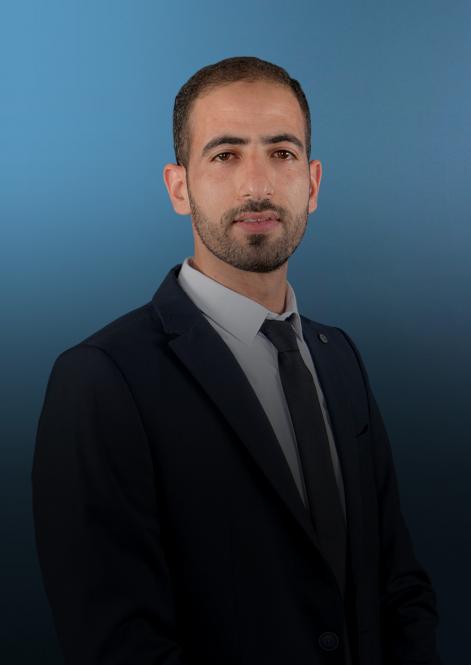
Speakers
Redouan Najah
Senior International Relations Specialist
Redouan Najah is a Senior International Relations Specialist at the Policy Center for the New South (PCNS).At the PCNS, which he joined in 2019, Redouan Najah conducts research on topics spanning the cyberspace, cyber defense, cybersecurity, Central Africa, and Africa-China relations.Redouan Najah holds a master's degree in Geopolitics and International Relations from University Cadi Ayaad, Marrakech, Morocco, and a bachelor’s degree in Economics and Management, from University Sultan Moulay Slimane, Beni Mellal, Morocco.Redouan is fluent in Arabic and French and has a good knowledge of English. ...
Hafez Ghanem
Senior Fellow
Hafez Ghanem – who holds a PhD in Economics from the University of California, Davis – is Senior Fellow at the Policy Center for the New South, a development expert with a large number of academic publications; and more than forty-year experience in policy analysis, project formulation and supervision, and management of multinational institutions.  He has worked in over 40 countries in Africa, Europe and Central Asia, Middle East and North Africa, and South East Asia.   Between 2015 and 2022 he was Vice President of the World Bank, initially responsible for the Middle East and North Africa, then for Sub-Saharan Africa and then East and Southern Africa.     In this latter capacity he was responsible for developing and implementing the World Bank ...

RELATED CONTENT

  • January 23, 2026
    The post-1945 international order, an architecture born of war-weariness and colonial twilight, is now a majestic but empty shell. Its foundational promise—a universal system of rules administered impartially—has been hollowed out by decades of selective enforcement, instrumentalized law, and a chasm between the rhetorical ideals of its custodians and their geopolitical practice. This is not a temporary dysfunction, but a systemic failure of legitimacy. From the invasion of Iraq und ...
  • Authors
    January 23, 2026
    Introduction: COP30 as a Test of Reality, Not AmbitionCOP30 in Belém was never going to be a breakthrough. In a world marked by fiscal exhaustion, geopolitical rivalry, and eroding trust in multilateralism, expecting transformational climate cooperation bordered on denial. The choice of the Amazon as host carried symbolic weight, but symbolism does not override power, interests, or institutional capacity.The outcome of COP30 confirms a deeper truth: the global climate regime has ent ...
  • Authors
    January 21, 2026
    In response to developing countries’ dissatisfaction with the New Collective Quantified Goal (NCQG) of $300 billion, which was decided at the Twenty-Ninth Conference Of the Parties (COP29) to the United Nations Framework Convention on Climate Change, in 2024 in Baku, Azerbaijan, the COP29 and COP30 presidencies promised to develop a roadmap to achieve $1.3 trillion in external climate finance that developing countries need, and to present it at COP30 in Belém, Brazil[1]. The two pre ...
  • Authors
    January 20, 2026
    This policy brief examines what the 2025–2026 period reveals about the future of global energy risk and the energy transition. After the shocks of 2021–2023, 2025 brought broad price easing: oil and coal prices declined as supply growth outpaced demand, and the World Bank projects further declines in the global energy price index in 2026, offering short-term relief for energy-importing economies. The brief argues, however, that the macroeconomic relevance of energy entering 202 ...
  • January 6, 2026
    La création de l’Alliance des États du Sahel (AES) symbolise une rupture politique et géostratégique majeure, appuyée sur un discours souverainiste et anti-occidental. Deux ans après, Mali, Burkina Faso et Niger peinent à assurer leur intégrité territoriale, à stabiliser leur sécurité intérieure et à bâtir une gouvernance solide. L’intégrité territoriale est un problème commun aux trois États, car dans ces pays, la cohésion de l’État et le contrôle du territoire sont directement men ...
  • December 22, 2025
    This paper presents the theoretical specification and current developments of a Spatial (Interprovincial) Computable General Equilibrium (SCGE) model for Morocco. The model is formulated as a Johansen-type CGE system, solved in linearized form, and is designed to analyze the regional and national impacts of policy shocks within an integrated interregional economic framework. The Moroccan economy is disaggregated into 72 provinces, 20 production sectors, multiple institutional agents ...
  • Authors
    Ahmed Ouhnini
    December 5, 2025
    L’« uberisation », terme né du nom de l’entreprise américaine Uber au début des années 2010, désigne initialement un modèle économique fondé sur la mise en relation directe entre offre et demande via des plateformes numériques. Rapidement popularisé, le concept s’est élargi, avec Airbnb dans l’hébergement, puis à une multitude d’autres secteurs : livraison de repas, services à domicile, commerce en ligne, voire des métiers traditionnellement régulés ou corporatistes. Ce néologisme t ...
  • Authors
    December 3, 2025
     Global GDP growth has proven resilient in 2025, despite the shocks caused by the trade policies implemented by United States President Donald Trump in the first year after his return to office. The gloomy projections offered by multilateral and private institutions in the first quarter of 2025 have given way to revised levels mostly in the 2.5% to 3% range for the year. ...