
APSACO 2021 - Présentation du rapport sur la géopolitique de l'Afrique / MOT DE CLÔTURE

June 23, 2021

Le Policy Center for the New South lance la quatrième édition du rapport annuel sur la géopolitique de l'Afrique. Cette nouvelle édition se concentrera sur la situation socio-politique et sécuritaire du continent en 2020. Le travail rétrospectif consacré cette année à l'Afrique vise non seulement à retracer les faits marquants des années précédentes, mais aussi à déceler les tendances et les signes de faiblesse au moyen d'analyses diverses, le but étant de prévoir les développements futurs sur le continent. Ce rapport donne la parole à des auteurs africains pour qu'ils développent un narratif africain sur les affaires du continent. La publication n'a pas pour but d'embellir artificiellement l'Afrique, mais a pour ambition de décrire l'Afrique telle qu'elle est, avec ses revers, tout comme ses progrès, ses ambitions et ses opportunités. Le rapport s'inscrit dans la vision du Policy Center d'un nouveau Sud ; un Sud conscient de ses limites et de ses vulnérabilités, mais fort de son potentiel, de ses moyens et de son génie. Cette vision préconise également un positionnement du Sud dans un monde en constante évolution.
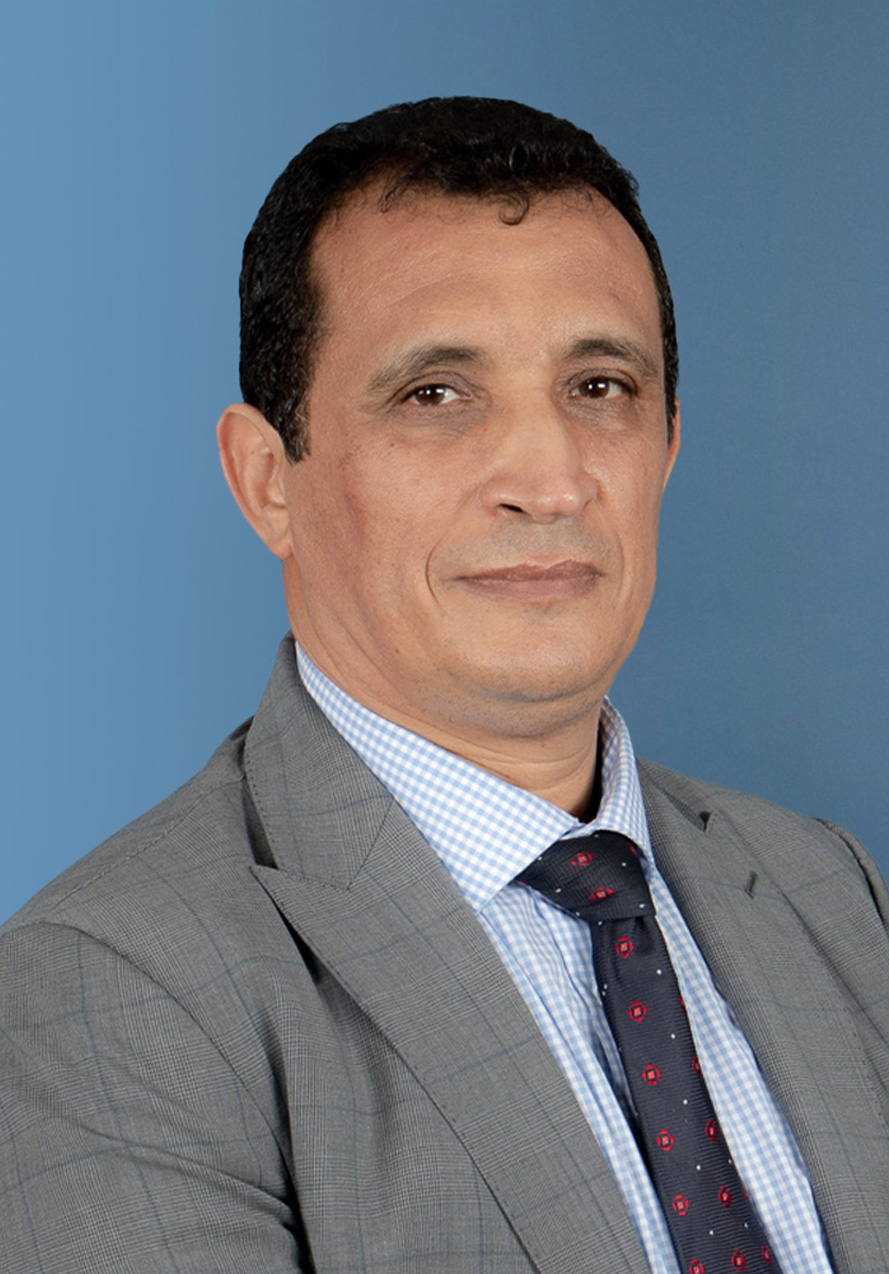
Speakers
Rachid El Houdaigui
Senior Fellow
Rachid El Houdaïgui is a Senior Fellow at the Policy Center for the New South and an Affiliate Professor at Mohammed VI Polytechnic University. He also serves as a professor of International Relations at Abdelmalek Essaadi University's Law Faculty in Tangier. His expertise encompasses international relations, geopolitics, defense and security, focusing on the Mediterranean region, North Africa, and the Arab world. He also serves as a professor at the Royal College of Advanced Military Studies in Kenitra and is a visiting professor at Cergy-Pontoise University (Paris), Cadiz University (Spain), and La Sagesse University (Beirut, Lebanon).   He is the founder of the Moroccan-Spanish review "Peace and International Security" and oversees the Observatory of Mediterranean St ...

RELATED CONTENT

  • January 30, 2026
    En 2019, Donald Trump a proposé d’acheter le Groenland, déclenchant un refus catégorique du Danemark et une tension diplomatique transatlantique. Cette initiative reflétait l’intérêt stratégique et économique des États-Unis pour l’Arctique et ses ressources. L’épisode a mis en lumière l...
  • Authors
    January 30, 2026
    The 2026 World Economic Forum (WEF) Annual Meeting took place in an environment of elevated economic uncertainty and structural risk repricing. According to the Global Risks Report (GRR) 2026, geoeconomic confrontation and economic downturn rank among the most severe near-term risks, while inflation-related risks and economic volatility have risen sharply in perceived severity compared with the previous edition. Notably, 50% of respondents to the Global Risks Perception Survey ...
  • January 29, 2026
    Le Mali, le Burkina Faso et le Niger, réunis au sein de l’Alliance des États du Sahel (AES), affirment l’ambition de bâtir une souveraineté nationale qui leur permettrait de s’émanciper de la domination et des influences extérieures et de se doter d’une liberté d’action dans les choix de développement politique et économique. Cependant, cette ambition se heurte à de nombreuses contraintes économiques et sécuritaires.La souveraineté ne peut se construire sans une base économique soli ...
  • January 23, 2026
    The post-1945 international order, an architecture born of war-weariness and colonial twilight, is now a majestic but empty shell. Its foundational promise—a universal system of rules administered impartially—has been hollowed out by decades of selective enforcement, instrumentalized law, and a chasm between the rhetorical ideals of its custodians and their geopolitical practice. This is not a temporary dysfunction, but a systemic failure of legitimacy. From the invasion of Iraq und ...
  • Authors
    January 21, 2026
    In response to developing countries’ dissatisfaction with the New Collective Quantified Goal (NCQG) of $300 billion, which was decided at the Twenty-Ninth Conference Of the Parties (COP29) to the United Nations Framework Convention on Climate Change, in 2024 in Baku, Azerbaijan, the COP29 and COP30 presidencies promised to develop a roadmap to achieve $1.3 trillion in external climate finance that developing countries need, and to present it at COP30 in Belém, Brazil[1]. The two pre ...
  • January 21, 2026
    The Policy Center for the New South hosted a seminar on January 16, 2026, titled “Crisis or Opportunity? Multilateralism in a Polycentric World.”The discussion addressed the growing strain on global cooperation amid overlapping financial, climate, security, and technological shocks, occ...
  • Authors
    Stephan Klingebiel
    Andy Sumner
    January 9, 2026
    Global cooperation is under stress. It hardly requires detailed analysis: the international system is in a profound crisis, when seen from many Northern vantage points. What if we see the same turbulence but from a different vantage point? For many in the Global South the current period signals risk, but also opportunity. That the same events could spark a sense of crisis in one group but opportunity in another is nothing new. However, the sheer scale, speed, and scope of recen ...
  • January 09, 2026
    This episode explores the Trump administration’s confrontational stance toward Venezuela, including sanctions and military posturing and evaluates their effectiveness in undermining Madur ...
  • January 6, 2026
    La création de l’Alliance des États du Sahel (AES) symbolise une rupture politique et géostratégique majeure, appuyée sur un discours souverainiste et anti-occidental. Deux ans après, Mali, Burkina Faso et Niger peinent à assurer leur intégrité territoriale, à stabiliser leur sécurité intérieure et à bâtir une gouvernance solide. L’intégrité territoriale est un problème commun aux trois États, car dans ces pays, la cohésion de l’État et le contrôle du territoire sont directement men ...